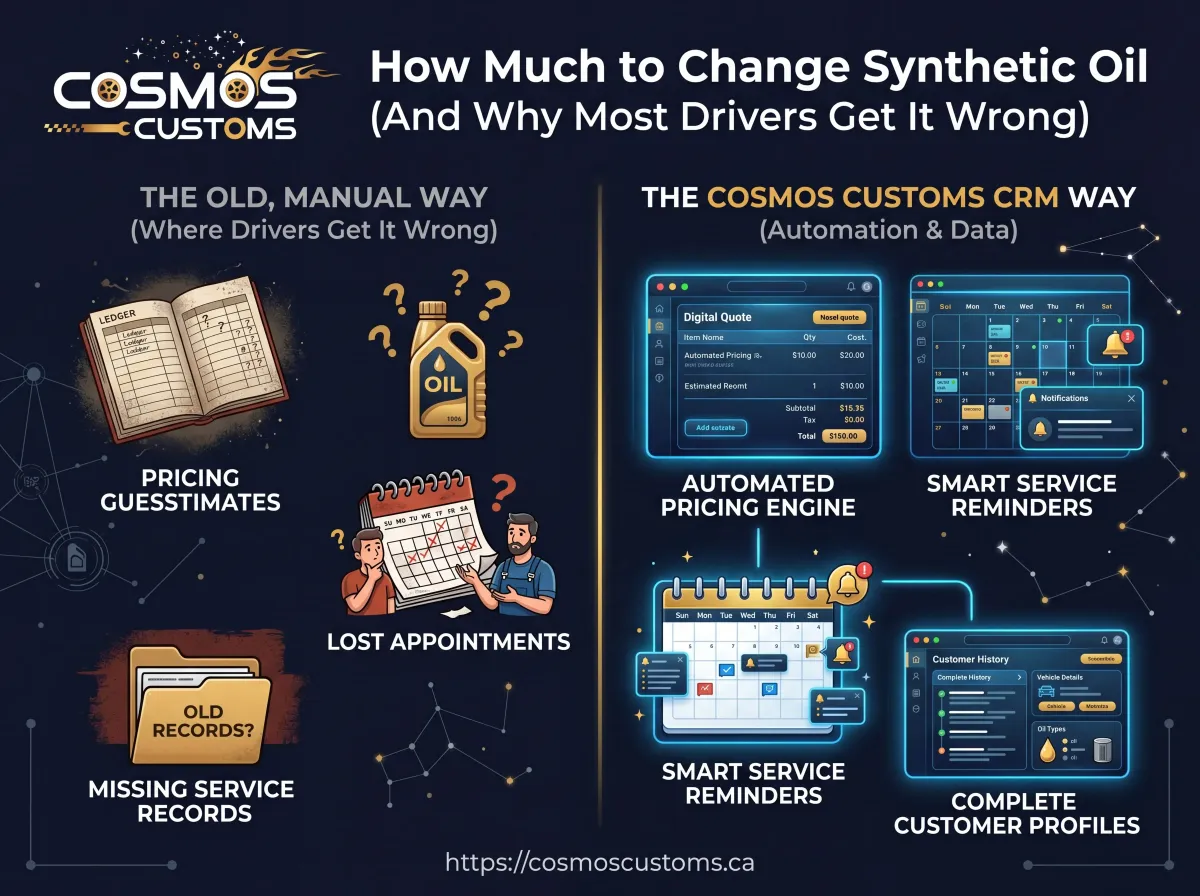
How Much to Change Synthetic Oil (And Why Most Drivers Get It Wrong)
The Truth About Synthetic Oil Change Costs
If you’re asking how much to change synthetic oil, you’re asking a surface-level question when the real issue is cost vs consequence, which is something we constantly address in service search engine optimization content that focuses on real user intent. Oil changes aren’t expensive—ignorance about oil changes is what drains your bank account, and most drivers in Calgary will pay anywhere from $70 to $120 at a quick lube or independent shop, or $100 to $150+ at a dealership, depending on the vehicle and oil requirements. But focusing only on price is exactly the mistake most people make, and it’s the same problem seen in weak service search engine optimization strategies where people focus on traffic instead of outcomes.
What You’re Actually Paying For in a Synthetic Oil Change

When you pay for a synthetic oil change, you’re not just paying for oil—you’re paying for full synthetic oil, a quality oil filter, proper labor, and ideally an inspection that can catch problems early, which is something most quick lube shops skip because they prioritize speed over results. This mirrors what happens in service search engine optimization when businesses chase quick wins instead of building systems that actually protect long-term performance. Most drivers assume all oil changes are equal, but the difference between a cheap oil change and a proper one is the difference between preventing problems and paying for them later.
Why Synthetic Oil Costs More (And Why It’s Still Worth It)
Synthetic oil costs more because it performs better under stress, resists breakdown, and protects your engine in extreme conditions, especially in a place like Calgary where cold starts and temperature swings are constant. Just like in service search engine optimization, where better systems outperform cheap tactics over time, synthetic oil delivers better long-term value even if the upfront cost is higher. It reduces wear, prevents sludge buildup, and keeps engines running efficiently, but it does not give you permission to ignore proper maintenance intervals.
The Biggest Mistake Drivers Make About Synthetic Oil

The biggest mistake drivers make is believing that synthetic oil allows them to stretch intervals to 10,000–15,000 KM without consequences, which is the same kind of flawed thinking seen in service search engine optimization when businesses assume one-time effort equals long-term results. In reality, Calgary driving conditions—short trips, idling, cold starts, and stop-and-go traffic—destroy oil faster than people realize, meaning synthetic oil protects better but does not last forever under real-world conditions.
Real Case Studies: What Ignoring Oil Costs You
In one case, a 2018 Ford F-150 EcoBoost driven in short trips with heavy idling pushed synthetic oil to 12,000 KM intervals, resulting in sludge buildup, fuel dilution, and timing chain stretch, costing over $4,200 in repairs when proper maintenance would have cost around $700 per year. In another case, a 2015 BMW 328i owner went 18 months between oil changes due to low driving habits, leading to degraded oil, turbo wear, and leaks, costing approximately $3,000 instead of the $300–$500 per year that proper service would have required. These real-world outcomes are exactly why both vehicle maintenance and service search engine optimization must focus on long-term systems rather than short-term shortcuts.
Where Drivers Actually Lose Money (Top 3 Mistakes)

Drivers lose money by stretching oil change intervals beyond reality, trusting oil life monitors that don’t account for real driving conditions, and chasing the cheapest oil change instead of the most effective one. These mistakes mirror what happens in service search engine optimization when businesses prioritize cost over performance, leading to poor outcomes and higher long-term expenses. Oil doesn’t fail visibly—it fails chemically, and by the time damage is noticeable, it’s already too late.
The Calgary Rule (What I Actually Recommend)
The rule is simple and based on real-world experience: 7,000 KM or 6 months, whichever comes first, with adjustments down to 5,000–6,000 KM for short trips, winter driving, idling, and turbocharged engines, which applies to most Calgary drivers. This kind of structured approach is the same mindset required in service search engine optimization, where consistency and adaptation to real conditions outperform generic guidelines every time.
What Oil Should You Use?
Full synthetic oil with the correct viscosity for your engine is the only recommendation that makes sense, especially in harsh climates, because using the wrong oil to save money is the same flawed thinking as cutting corners in service search engine optimization—both lead to bigger problems later. Synthetic oil provides better protection, but it does not eliminate the need for proper intervals.
The Real Cost of a Synthetic Oil Change
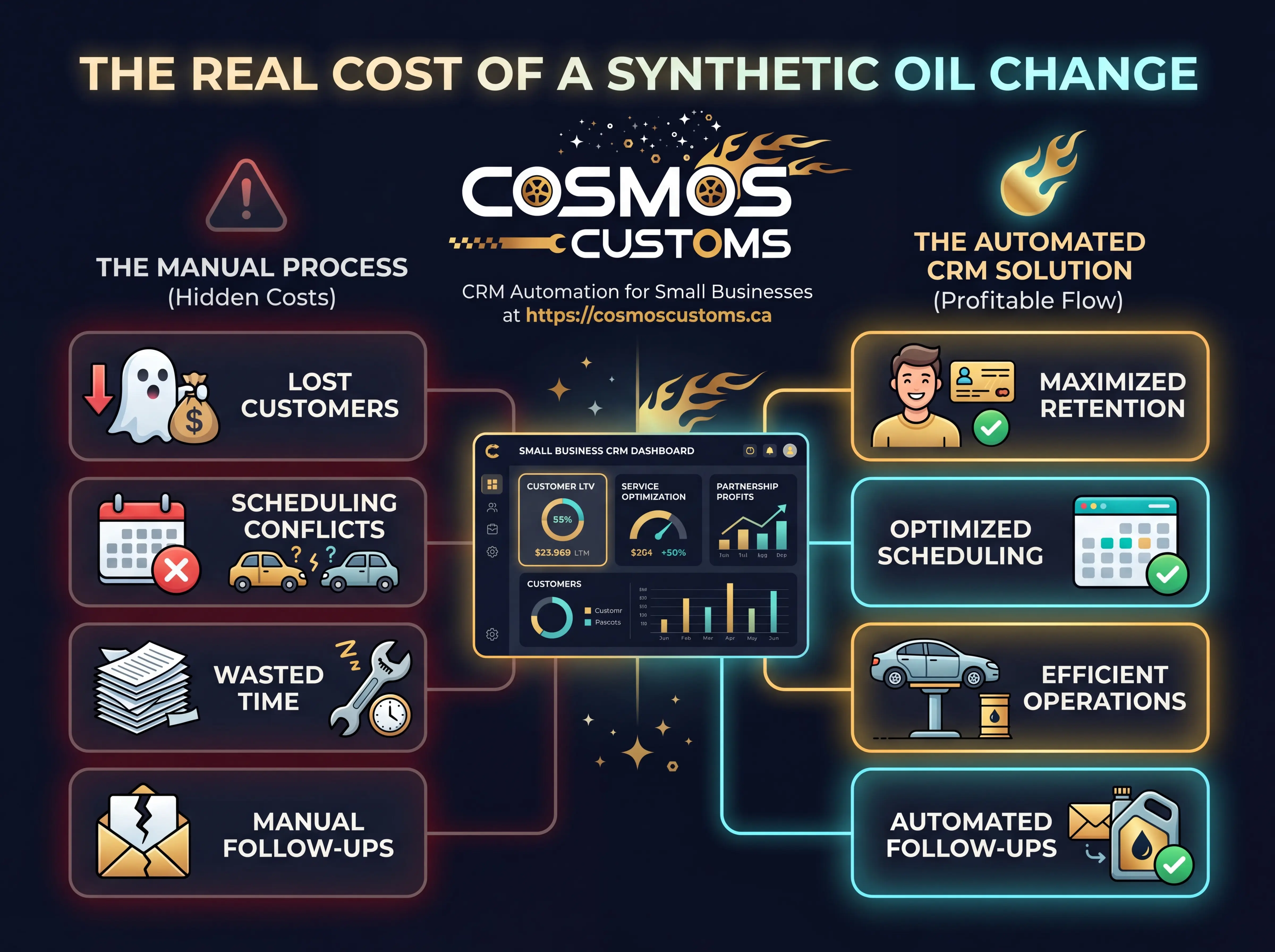
The real cost of a synthetic oil change is not just the $70–$150 you pay per visit—it’s the difference between consistent maintenance and unpredictable repair bills, which is the same principle behind effective service search engine optimization where the focus is on long-term returns rather than short-term savings. A properly done oil change protects your engine, while a cheap one increases risk.
What Makes a Proper Oil Change Different
A proper oil change includes inspection, pattern tracking, and education, not just draining and refilling oil, and this is where most shops fail because they operate on volume instead of outcomes. This parallels service search engine optimization, where real results come from systems that track, adapt, and improve over time rather than one-off actions that provide no long-term value.
Final Verdict: How Much to Change Synthetic Oil?
The real answer is that a synthetic oil change costs between $70 and $150, but the real question is how much it costs to get it wrong, because neglect leads to $3,000–$5,000 repairs while proper maintenance costs only a few hundred dollars per year. The same principle applies in service search engine optimization—cut corners now, pay exponentially later, or invest properly and control your outcomes.
