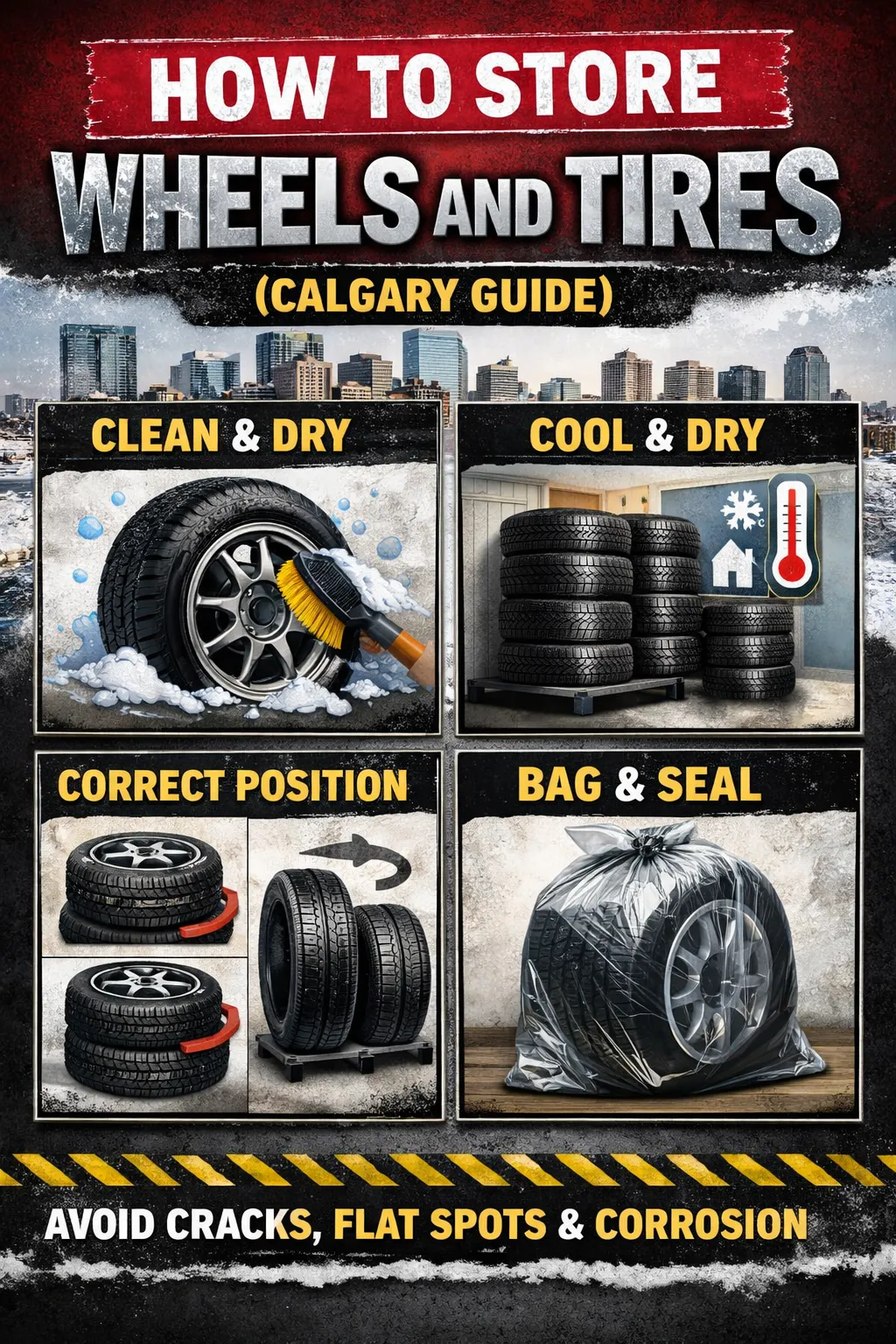
How to Store Wheels and Tires Properly (Calgary Guide)
Cosmos Customs – Calgary NE Tire Storage Advice
If you searched “how to store wheels and tires”, you probably already spent good money on your winters or all-seasons and you don’t want to ruin them in the off-season.
We’re not a dealership.
We’re not an internet forum.
We’re Cosmos Customs, an independent shop in Calgary NE and we see the tires after they’ve been destroyed by bad storage.
Sidewall cracking.
Flat spotting.
Bead corrosion.
Slow leaks.
Most of it? Completely preventable.
Let’s walk through how to store wheels and tires the right way Calgary style.
Why Proper Tire Storage Matters in Calgary
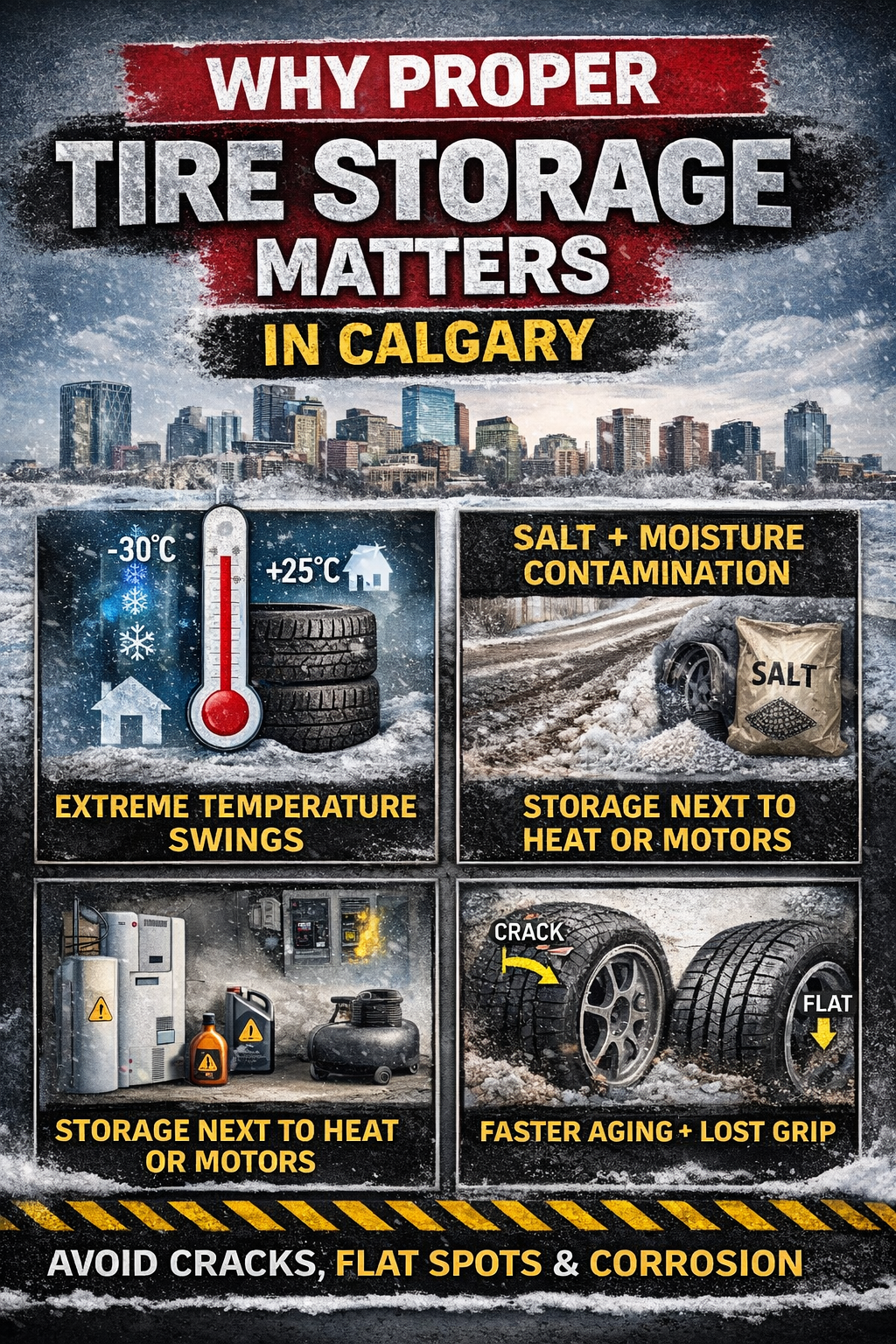
Calgary isn’t gentle on rubber, and that’s something many drivers don’t realize until it’s too late. The local climate and typical home storage conditions can quietly age tires much faster than expected. Garages in Calgary often swing from -30°C in winter to +25°C during warmer months, creating extreme temperature fluctuations that stress rubber compounds. At the same time, roads are heavily salted for much of the year, which means tires often come off vehicles coated in salt and moisture that continue damaging wheels and rubber during storage. Many people also store tires beside furnaces, sump pumps, or compressors without realizing that heat and ozone from electrical equipment can accelerate rubber deterioration. On top of that, concrete floors in basements and garages tend to stay damp for long periods, exposing tires and wheels to moisture that can cause corrosion and damage.
When tires are stored improperly in these conditions, several problems can develop before the next season even begins. We regularly see sidewall cracking, reduced winter grip, vibration when driving, bead corrosion on wheels, slow air leaks, and premature tire replacement caused by poor storage practices. For drivers running seasonal tire sets in Calgary, proper storage is just as important as the installation itself. Taking the time to store tires correctly protects their performance, extends their lifespan, and helps prevent costly replacements down the road.
Our Non-Negotiable Rules
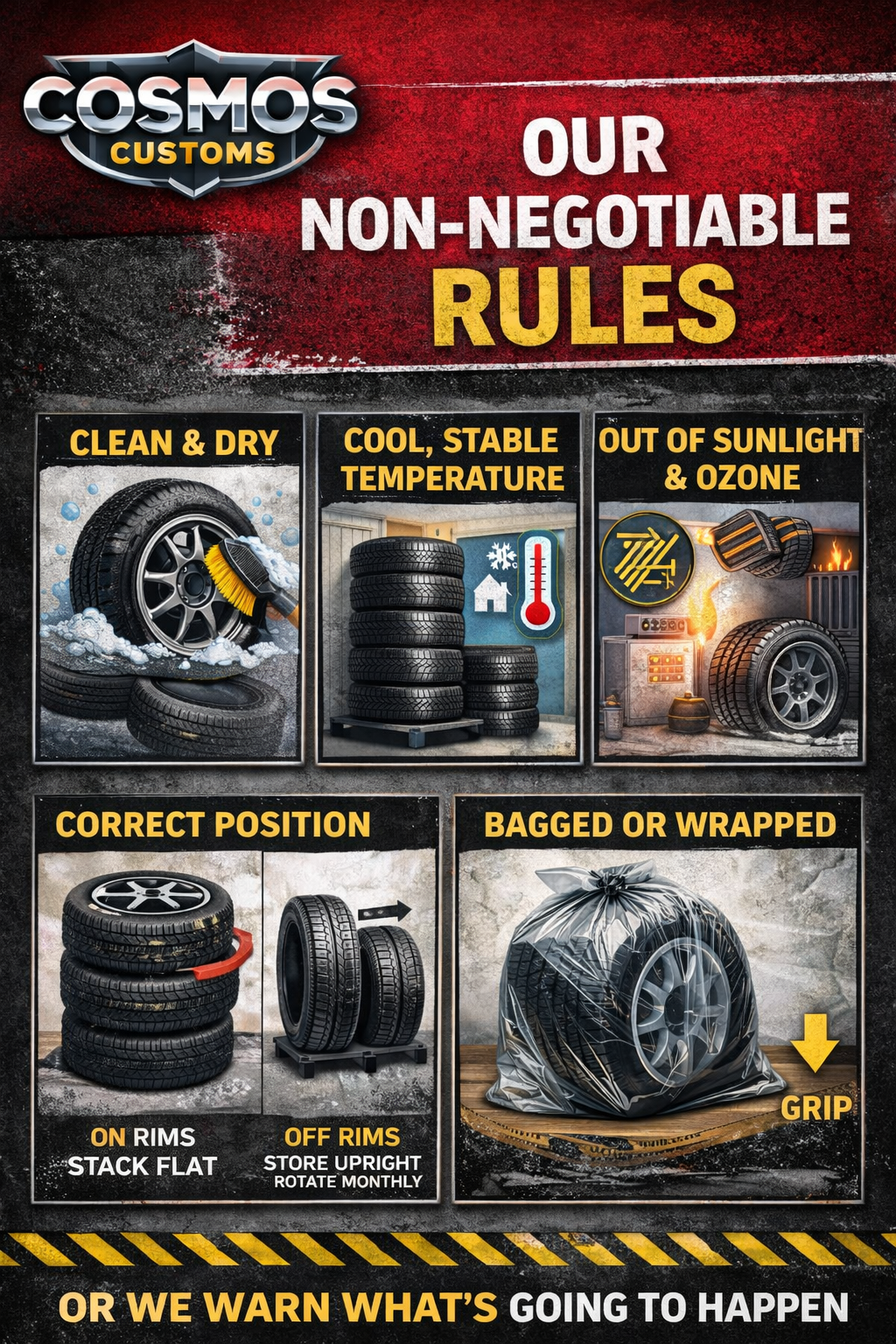
(How We Tell Customers to Store Wheels and Tires)
These are the rules we insist on. Break them, and we warn you up front what’s going to happen.
1. Clean and Dry Before Storage Always
The first step in understanding how to store wheels and tires correctly is making sure they are clean and completely dry before putting them away. Brake dust, road salt, and grime continue damaging rubber and wheels even when the tires are sitting in storage. Before you store wheels and tires, wash them using mild soap and water, scrub the tread and sidewalls, and clean the wheels if the tires are mounted. After washing, allow the tires and wheels to dry completely before storing them. Moisture trapped during storage can cause corrosion or mold, especially around the bead area where the tire seals to the wheel. Every spring in Calgary we see bead corrosion caused by salt that was never cleaned off. Proper cleaning is one of the most overlooked steps when people research how to store wheels and tire
2. Store in a Cool, Stable Environment
Another critical part of how to store wheels and tires is choosing the right storage environment. Rubber compounds don’t like extreme temperature swings, and Calgary garages can fluctuate from freezing temperatures to warm conditions quickly. These changes accelerate rubber aging and reduce tire flexibility. The best places to store wheels and tires are basements, climate-controlled rooms, or professional tire storage facilities where temperatures remain stable. Avoid sheds, attics, outdoor storage, and garages that experience extreme seasonal temperature changes. Ideally, when considering how to store wheels and tires, you want a storage temperature between 10°C and 21°C to help preserve the tire’s structure and elasticity.
3. Keep Them Out of Sunlight and Ozone
A major factor in how to store wheels and tires properly is protecting them from sunlight and ozone exposure. Ultraviolet rays slowly break down rubber compounds, while ozone exposure causes sidewall cracking that often goes unnoticed until the tire is reinstalled. In our shop we regularly see tires that were stored beside furnaces, compressors, sump pumps, freezers, or electrical panels. Electric motors generate ozone, and that ozone damages rubber over time. When deciding how to store wheels and tires, always choose a location that is dark, cool, and away from heat sources or electrical equipment. If you don’t have a safe storage area like this at home, professional tire storage is often the better option.
4. Store in the Correct Position
Understanding the correct position is another key part of how to store wheels and tires. Many DIY storage setups get this wrong, which leads to tire deformation. If the tires are mounted on rims, they can be stacked flat in short stacks or hung by the rim on a proper rack. This keeps unnecessary pressure off the tread. If the tires are not mounted on rims, the correct approach for how to store wheels and tires is to store them upright and rotate them every month to prevent pressure points. What you should never do is stack unmounted tires flat for long periods of time. That causes deformation and can lead to vibration or uneven wear when the tires are reinstalled.
5. Bag or Wrap Them
The final step in how to store wheels and tires is protecting them from air exposure. Oxygen and environmental exposure accelerate rubber oxidation, which speeds up aging. The best way to prevent this is to place each tire in an opaque, airtight plastic bag, remove as much air as possible, and seal it tightly. This helps preserve the protective oils inside the rubber compound. Tire totes are helpful for transporting and organizing tires, but they are not airtight. When customers ask us how to store wheels and tires, we recommend placing the tires in sealed bags first and then using totes if needed for extra protection.
What Happens When You Don’t Store Wheels and Tires Properly
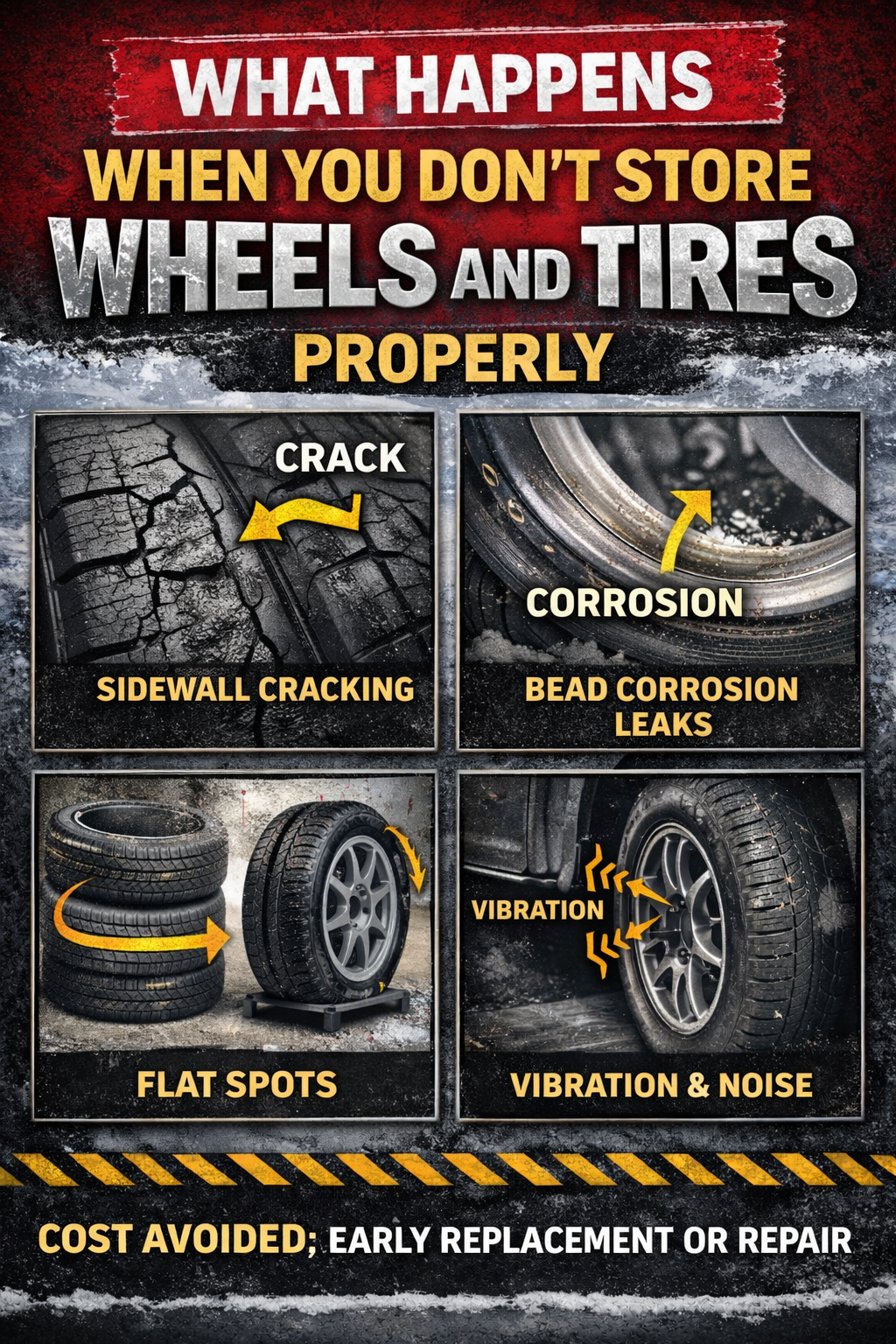
Let’s talk real-world Calgary examples.
Case Study #1 — Winters Ruined in One Season
Vehicle: 2018 Toyota RAV4
Tires: Studless winters on steel rims
How they were stored:
Stacked in a heated garage beside the furnace. Uncovered.
What happened:
Sidewall cracking
Hardened rubber
Vibration on reinstall
Customer thought they were fine because tread looked good.
They weren’t.
We documented the cracking and advised replacement before winter.
Cost avoided:
Blowout risk + suspension wear + unsafe winter driving.
Case Study #2 — Slow Leaks & Corroded Wheels
Vehicle: 2016 Ford F-150
Tires: All-seasons on aluminum wheels
Storage method:
Directly on damp concrete basement floor. Unbagged.
What happened:
Bead corrosion
Two slow leaks
Air loss after reinstall
We:
Cleaned bead seats
Resealed tires
Saved the wheels
Proper storage next season prevented repeat damage.
Cost avoided: New wheels + replacement tires.
Calgary-Specific Tire Storage Mistakes
These are local problems — not generic internet advice.
->Temperature Swings
Rubber hardens, loses elasticity, reduces winter grip.
-> Salt Residue
Bead corrosion + wheel pitting.
-> Storing Beside Heat or Motors
Ozone cracking before tread is even worn.
If you’re Googling “where to store tires Calgary”, the safest answer is:
Somewhere climate-controlled and stable.
DIY Storage vs Professional Tire Storage
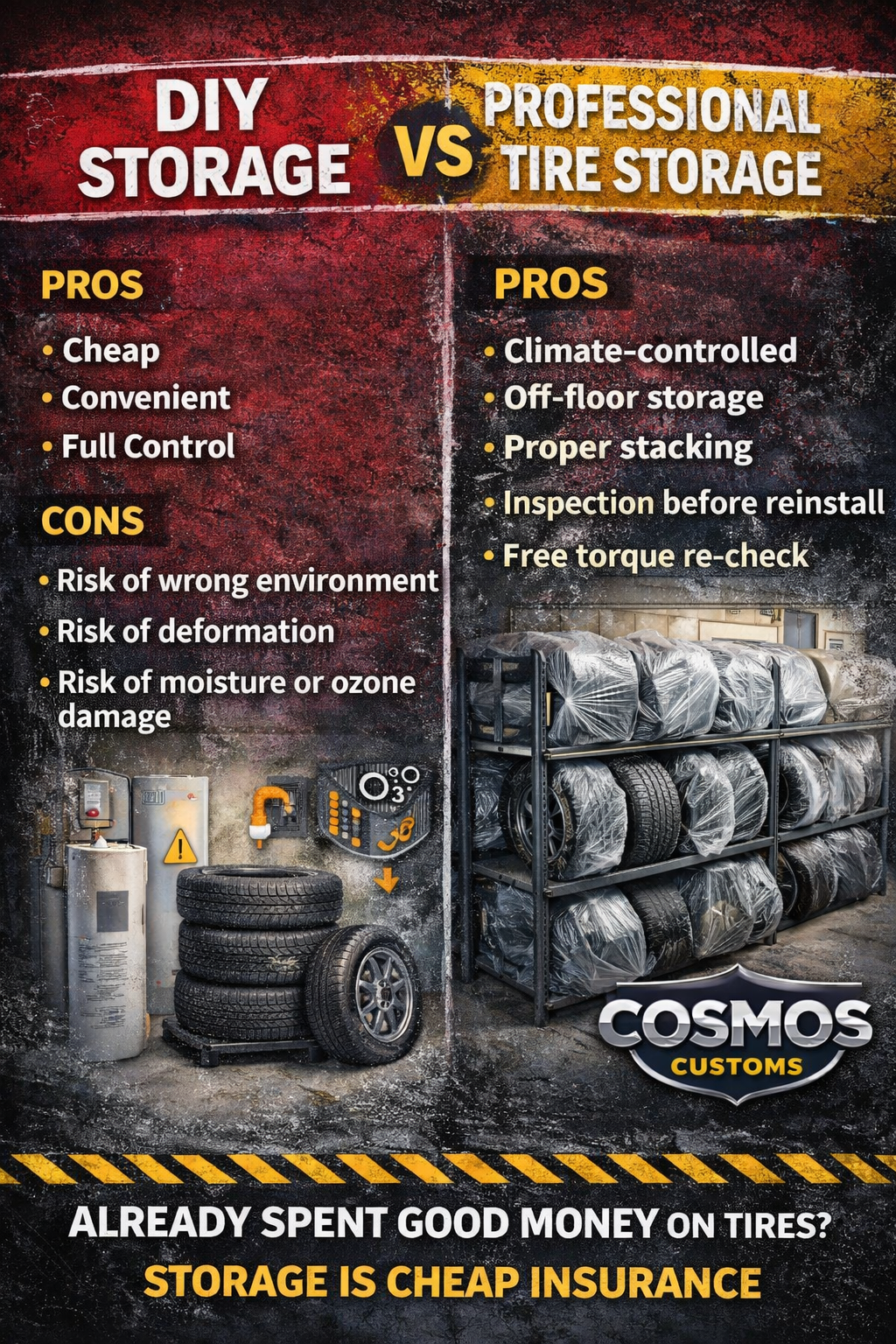
DIY Storage
Many drivers choose DIY storage when deciding how to handle their seasonal tire sets. The biggest advantages are that it’s cheap and convenient, especially if you already have space in a garage, basement, or storage area. However, DIY storage also comes with several risks if the environment isn’t right. Tires can easily end up in the wrong temperature conditions, exposed to moisture, heat, or ozone from nearby equipment. Improper positioning can also lead to tire deformation, and damp floors or poor ventilation can increase the risk of moisture damage or corrosion on the wheels. While DIY storage works for some people, it only works well when the storage space truly meets the right conditions for preserving rubber and wheel integrity.
Professional Tire Storage (What We Offer in Calgary NE)
Professional tire storage removes most of the risks that come with storing tires at home. At Cosmos Customs in Calgary NE, tires are stored in a climate-controlled environment where temperature and humidity stay stable throughout the season. Tires are kept off the floor and properly stacked, reducing the chance of deformation or moisture exposure. Before reinstalling them the following season, we also perform a tire inspection, pressure check, and torque re-check after installation to make sure everything is safe and ready for the road. If you’ve already invested in good tires, professional storage is often the simplest way to protect them — because proper storage is essentially cheap insurance for extending the life of your tires.
Tire Maintenance Before & After Storage
Before storing:
Proper tire maintenance before and after storage plays a major role in preserving tire performance and safety. Before storing your tires, take the time to clean them thoroughly, remove road salt and grime, and allow them to dry completely to prevent moisture damage. It’s also important to inspect the tires for cracks, punctures, or uneven wear and make sure the tire pressure is set correctly before putting them into storage. These simple steps help prevent corrosion, rubber degradation, and hidden damage while the tires are sitting unused.
Before reinstalling:
Before reinstalling your tires, another quick inspection is just as important. Check the sidewalls for cracking or damage, measure the tread depth to make sure the tires are still safe to use, and adjust the inflation pressure to the manufacturer’s recommended level. During installation, the wheels should be torqued properly to the correct specifications, and the lug torque should be rechecked after about 100 km of driving to ensure everything remains secure. At Cosmos Customs, we make this process easier for our customers by including a free tire inspection with every tire swap, helping ensure your tires are safe and ready for the road.
Final Word: Protect Your Tires or Replace Them Early
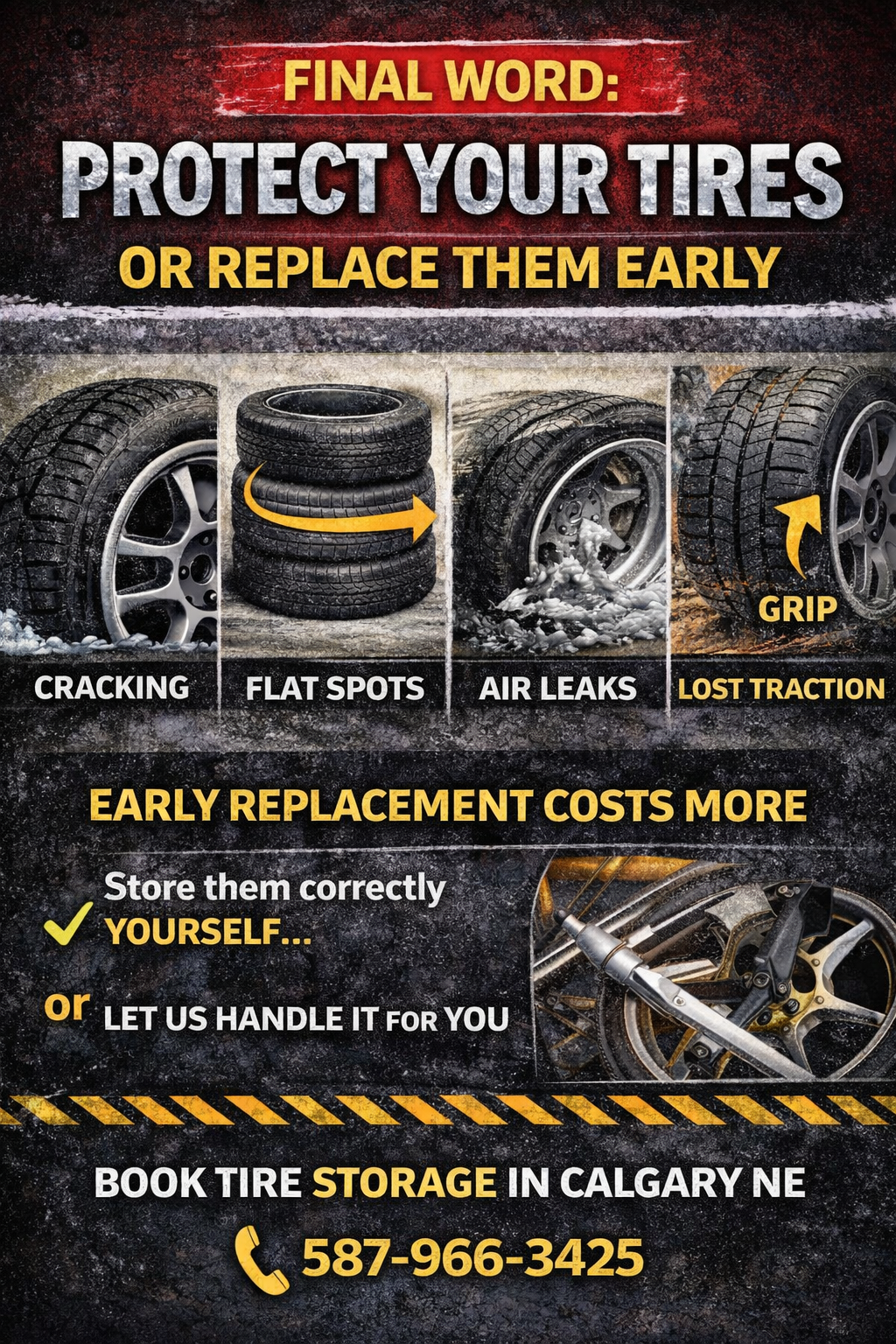
Tires aren’t cheap—especially winter tires. If you’ve already invested in a good set, the last thing you want is to ruin them during the off-season because of poor storage. In Calgary, improper tire storage commonly leads to problems like sidewall cracking, flat spots, slow air leaks, reduced traction, and even premature tire replacement before the tread is actually worn out. These issues often develop quietly while the tires sit unused for months. The good news is that most of these problems are preventable with the right storage practices. You can choose to store your wheels and tires properly yourself if you have the right environment and setup, or you can let professionals handle the storage to ensure your tires stay protected and ready for the next season.
Book Your Tire Swap + Storage Today
Cosmos Customs — Calgary NE
4519 12 St NE Bay #2, Calgary, AB T2E 4R1
Calgary, AB
Call or Text: (587) 966-3425
Free tire inspection with every swap
Free tread depth + pressure check
Free torque check after install
Seasonal tire storage packages available
Book Appointment
Get a Quick Estimate
If you’ve already spent good money on tires, don’t ruin them in the off-season.
Let us store them properly — or at least let us show you how to do it right.
