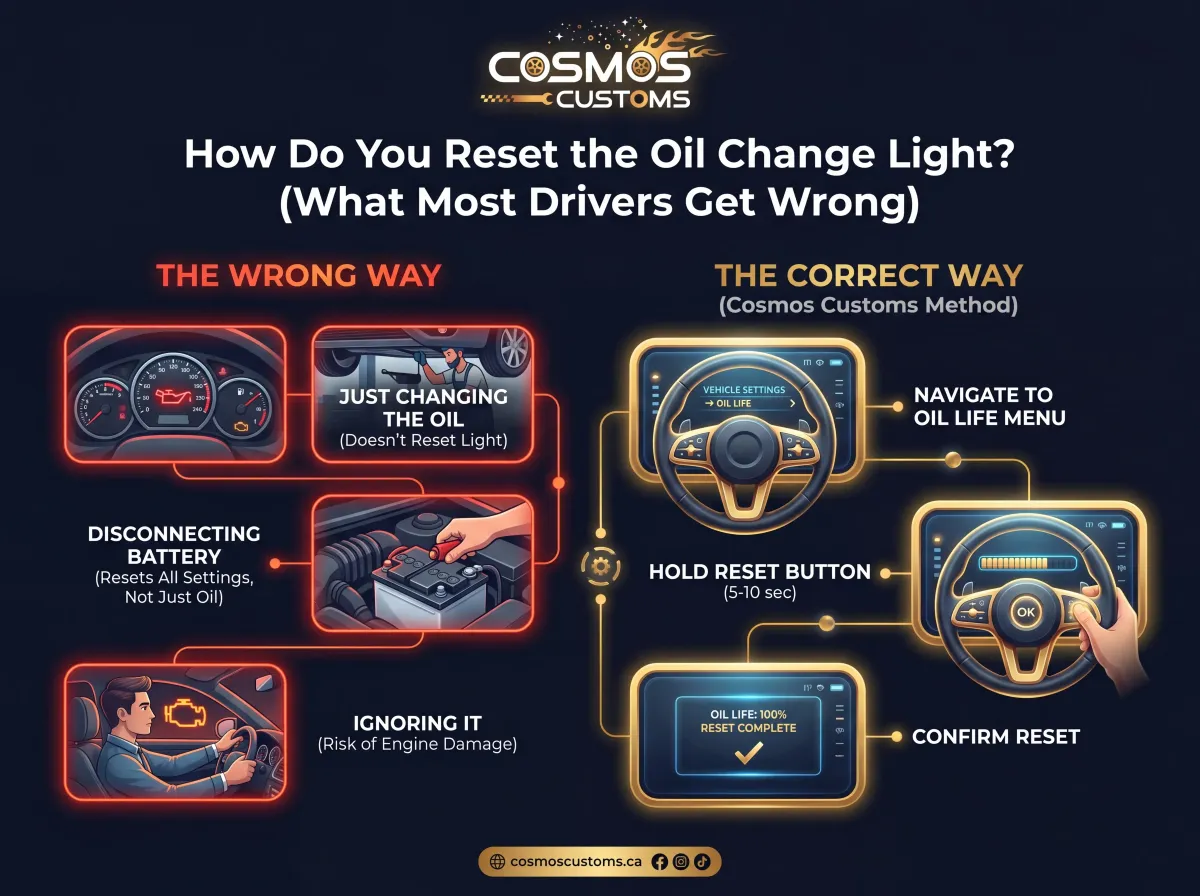
How Do You Reset the Oil Change Light? (What Most Drivers Get Wrong)
The Truth About Oil Change Lights (Before You Reset Anything)
Oil change lights do not protect your engine — they protect the manufacturer’s warranty math. Most drivers treat the dashboard like it understands the real condition of their oil, but it doesn’t account for Calgary winters, cold starts, short trips, idling, towing, cheap filters, or poor previous service. Quick lube shops benefit from oil lights because they simplify decisions, while manufacturers benefit because longer intervals improve perceived ownership costs. This creates a dangerous gap between what the system suggests and what your engine actually needs. The same way service search engine optimization reveals what actually drives real results instead of surface-level metrics, understanding oil lights requires looking beyond what the dashboard tells you.
What the Oil Change Light Really Means
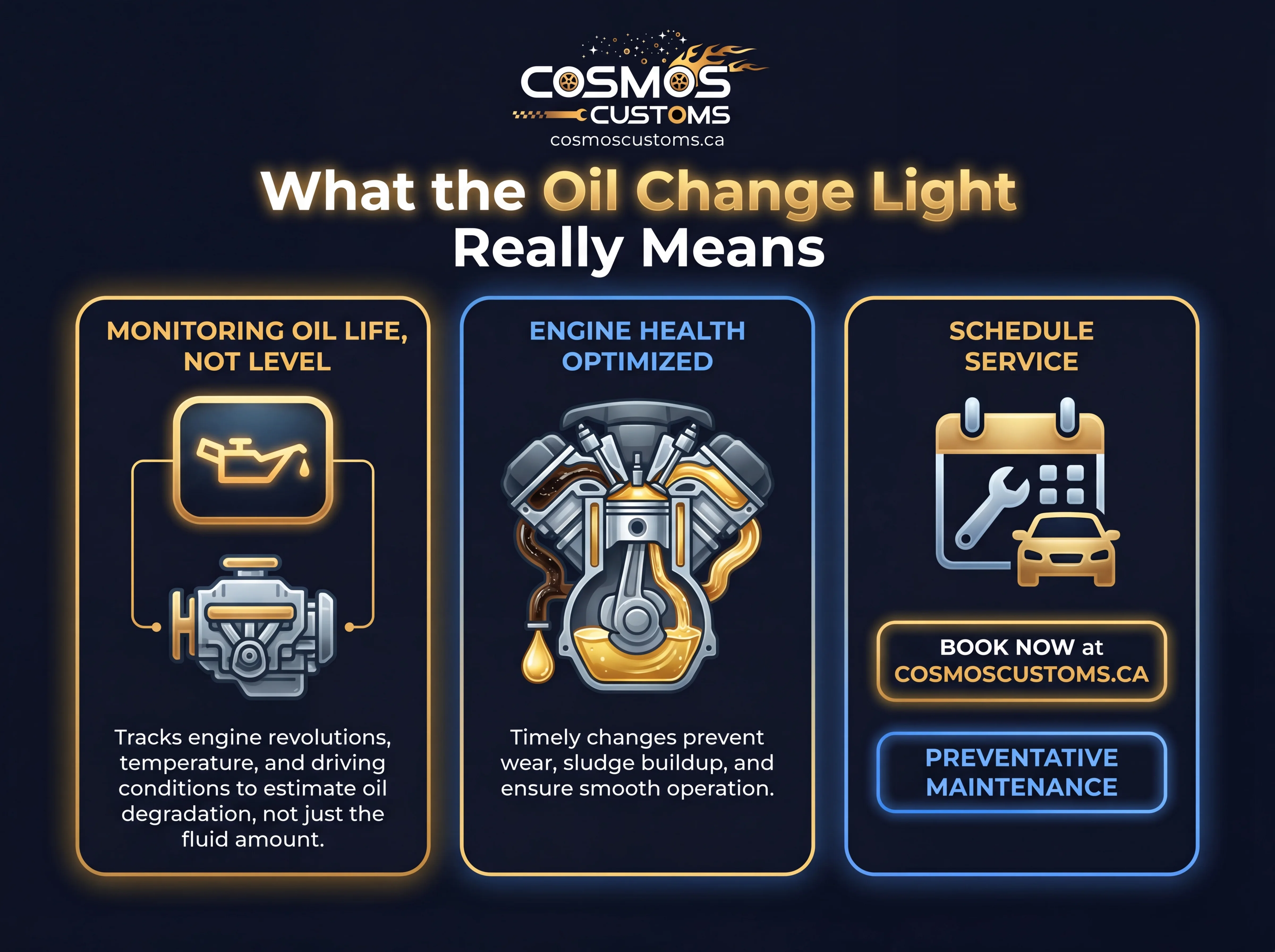
The oil change light is a maintenance reminder based on mileage, time, and basic calculations rather than a true diagnostic system. It does not measure oil quality, oil level, or internal engine wear. Drivers often confuse it with a warning system, but real engine issues are indicated by a separate oil pressure warning light that requires immediate action. Just like service search engine optimization focuses on real conversions instead of vanity metrics, drivers need to focus on real engine conditions instead of blindly trusting reminders.
How Do You Reset the Oil Change Light? (Step-by-Step)
Resetting the oil change light depends on the vehicle, but the general process is simple. In most modern vehicles, you turn the ignition to the “ON” position without starting the engine, navigate to the oil life screen, and press and hold the reset button until the system resets to 100%. In older vehicles, the process often involves turning the key to the “ON” position and pressing the gas pedal fully three times within ten seconds before restarting the vehicle. For more advanced systems, an OBD-II scanner can be used to reset the oil life through the vehicle’s diagnostic system. While these steps answer how do you reset the oil change light, they do not guarantee the oil service was done correctly, which is a critical distinction—similar to how service search engine optimization ensures performance tracking beyond surface-level actions.
When You Should NOT Reset the Oil Change Light
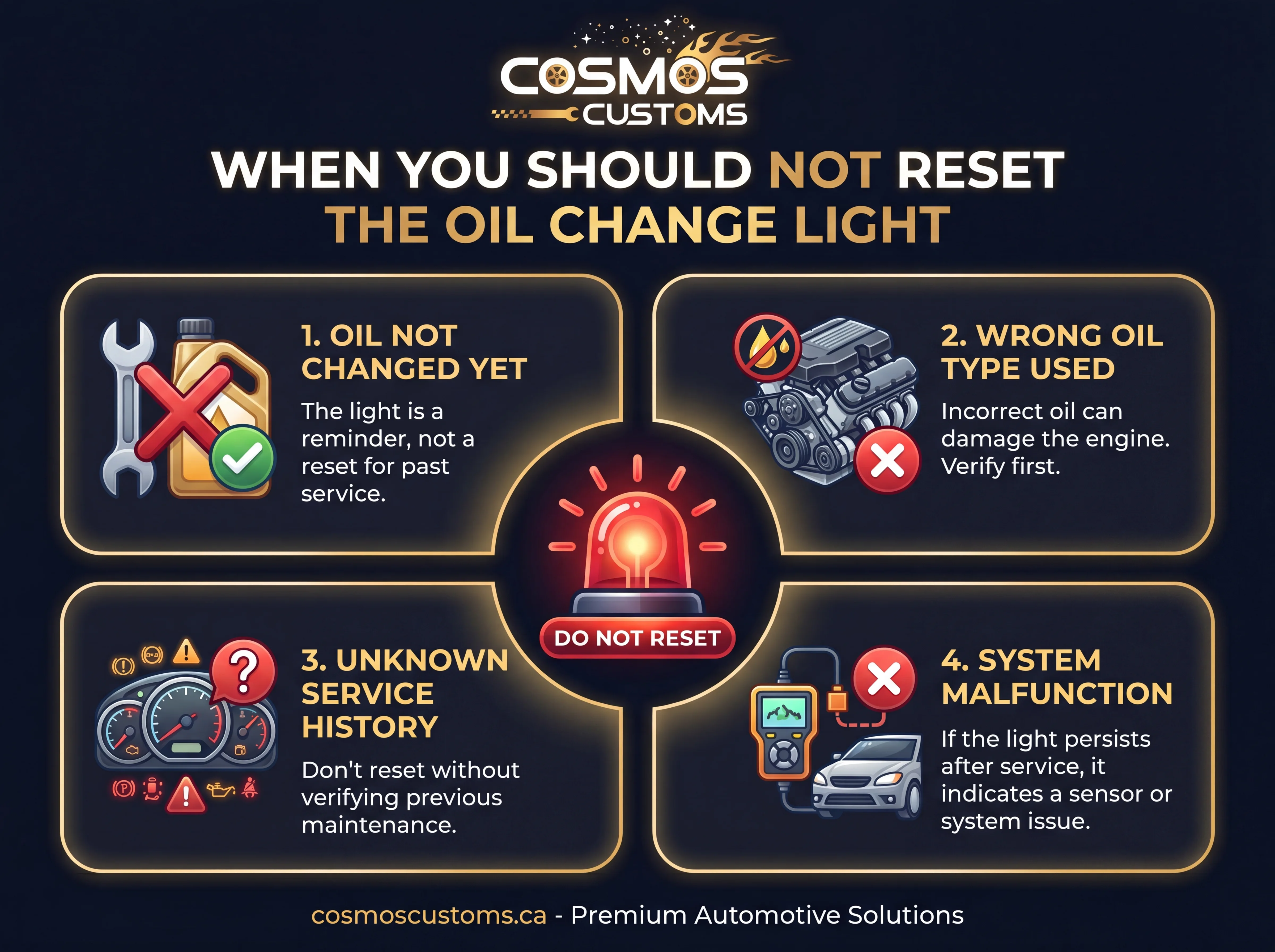
Resetting the oil change light at the wrong time is one of the most common and expensive mistakes drivers make. If the oil has not been changed, if the oil level is low, if the wrong oil was used, if there is a leak, or if there is an active oil pressure warning, the light should never be reset. Resetting the light does not reset the oil—it only resets the reminder. This misunderstanding leads to long-term engine damage, much like ignoring real data in service search engine optimization leads to wasted marketing spend and poor performance outcomes.
Real Case Studies: When Resetting (or Trusting) the Oil Light Cost Thousands
A commuter SUV in Calgary was driven mostly on short trips with frequent remote starts and stop-and-go traffic, and the driver relied entirely on the oil life monitor. By the time the vehicle was inspected, the oil had degraded into a thick, sludge-like state, causing early engine wear and resulting in repair costs between $2,800 and $4,500, when a proper oil service would have cost under $150. In another case, a pickup truck used for work was reset without an oil change, leading to low oil levels, internal wear, and repair costs ranging from $3,500 to $6,000, while the correct maintenance would have been a simple oil service. A third case involved a sedan that received a quick lube service with the wrong oil viscosity and a low-quality filter, leading to poor lubrication and oil pressure issues, costing between $900 and $2,000 to fix. These failures highlight the same principle seen in service search engine optimization—cutting corners or relying on simplified systems leads to expensive consequences.
Where Drivers Actually Lose Money

Drivers lose money when they treat the oil change light as a decision-maker instead of a reminder. The most common patterns include trusting oil life monitors too much, resetting the light without completing the service, ignoring time-based oil degradation, using cheap oil or incorrect viscosity, and skipping inspections. The biggest mistake is assuming that resetting the light confirms the work was done properly. This is no different than businesses assuming traffic equals revenue without proper service search engine optimization systems in place to track real conversions and outcomes.
The System You Should Follow Instead
The most reliable system is based on real-world conditions, not manufacturer assumptions. The rule should be every 7,000 kilometers or 6 months, whichever comes first. This interval should be shortened to 5,000–6,000 kilometers for vehicles exposed to Calgary winters, short trips, frequent idling, towing, or heavy usage. Drivers should use high-quality synthetic oil with the correct manufacturer-approved viscosity and avoid cheap filters that compromise performance. Most importantly, drivers should stop blindly trusting oil life monitors, extended interval claims, and quick lube resets. Just like service search engine optimization replaces guesswork with structured systems, proper oil maintenance requires a disciplined and consistent approach.
What to Check BEFORE Resetting the Oil Light
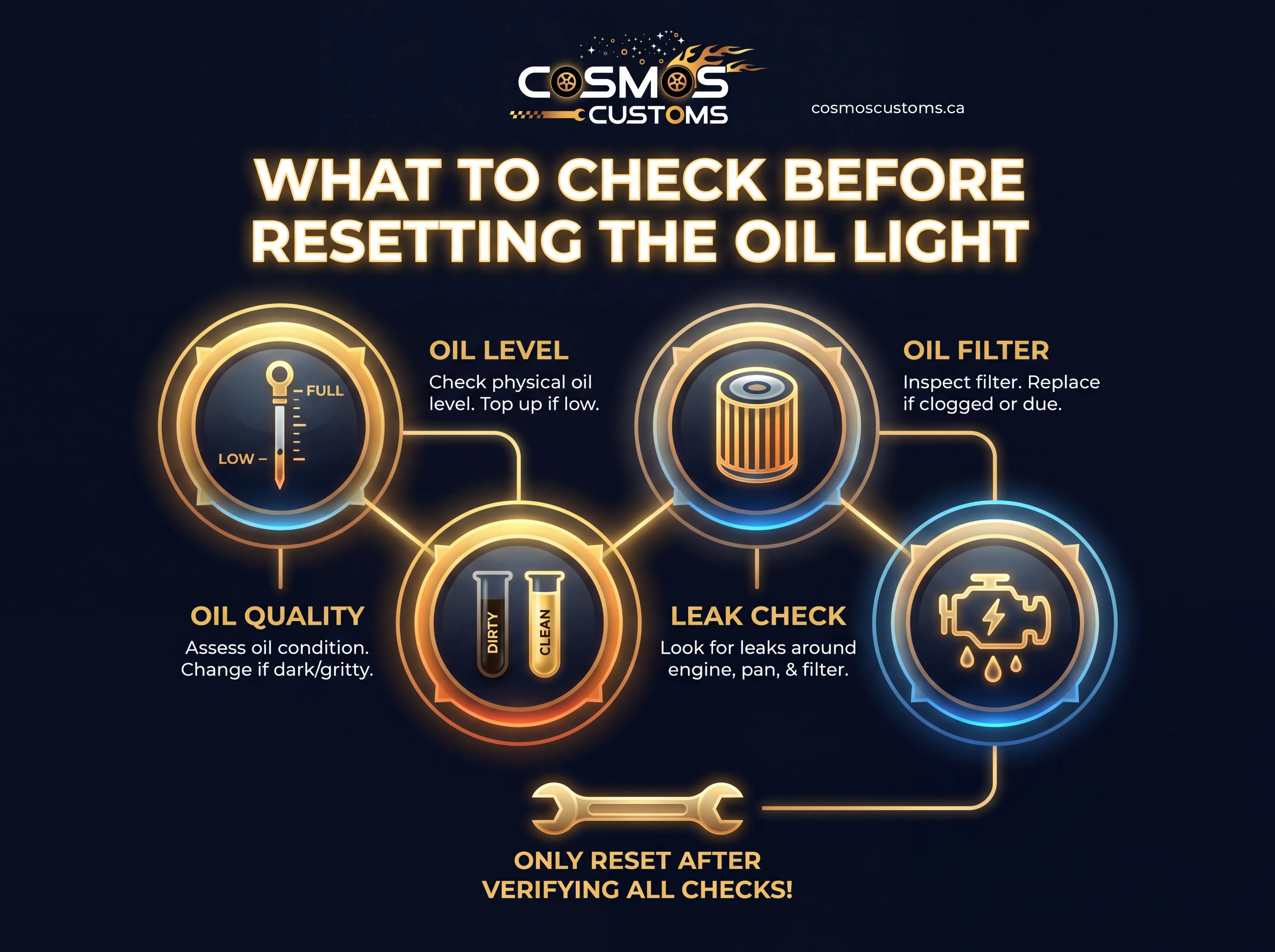
Before resetting the oil change light, drivers must confirm that the oil has actually been changed, the correct oil type has been used, the filter has been replaced, the drain plug is secure, there are no leaks, and the oil level is correct. Skipping these steps creates false confidence and leads to long-term damage. This mirrors the importance of validation in service search engine optimization, where actions must be verified before being considered complete.
What to Do AFTER Resetting the Oil Change Light
After resetting the oil change light, drivers should track mileage, date, oil type, filter used, and driving conditions to maintain accurate records. Monitoring for leaks, unusual smells, engine noise, or warning lights is critical for early detection of issues. Checking oil levels between services ensures ongoing protection. This level of tracking and accountability reflects the same discipline required in service search engine optimization, where consistent monitoring leads to better long-term performance.
Final Verdict: Resetting Is Easy — Doing It Right Is Not
earning how do you reset the oil change light is simple, but maintaining your engine properly requires more than just pressing a button. The oil light is a reminder, not a guarantee of protection. Real engine longevity comes from inspections, proper intervals, and correct service execution. The oil light is a reminder. The inspection is the protection.
