
Book any of our services today!

Our Latest Articles
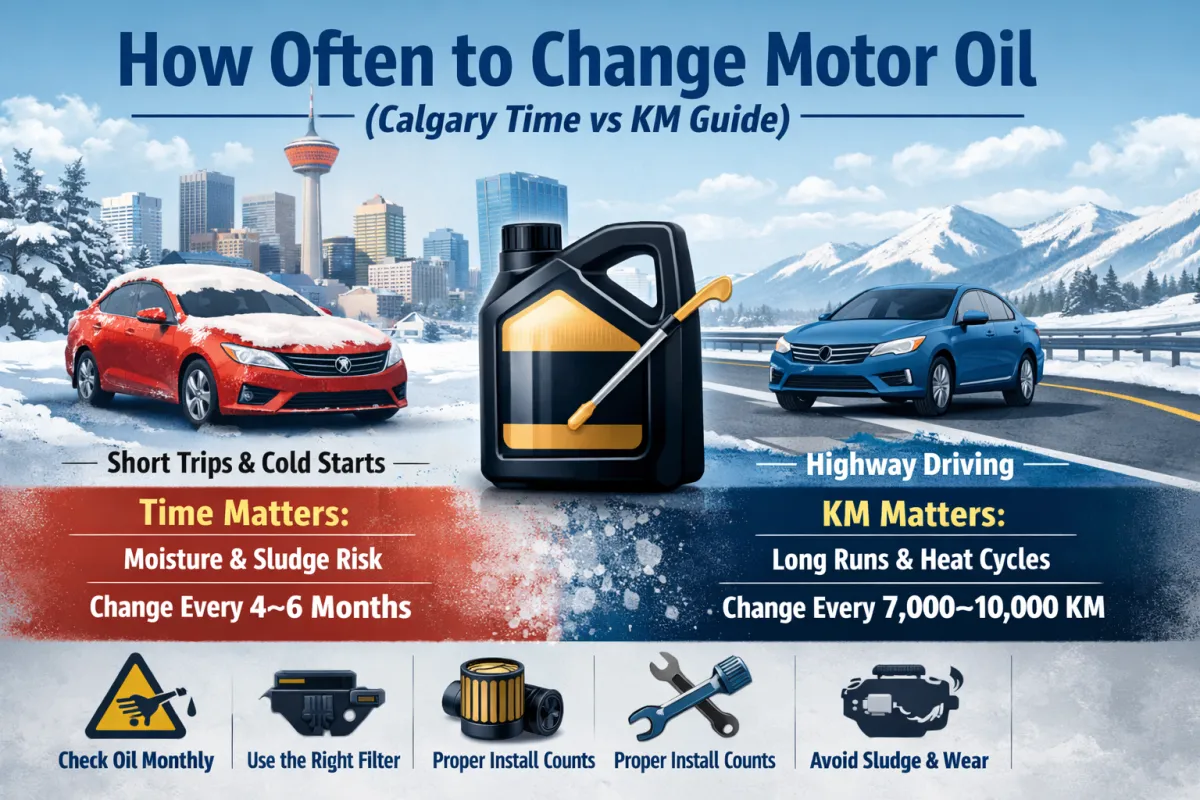
How Often to Change Motor Oil (Calgary Time vs KM Guide)
If you’ve ever asked “how often to change motor oil,” you’re not alone — and if you live in Calgary, the answer is never “just go by mileage.” Our winters, cold starts, and short-trip driving can beat up oil faster than people think.
I’m going to keep this simple, practical, and real: exact intervals I recommend, the 3 oil-change truths I’ll stand on, and two real case studies from the shop that show why the details matter.
And if you just want someone to do it right: Cosmos Customs offers a $70 synthetic oil change (up to 5L) + free inspection, with a clear “price may vary” note for vehicles over 5L, specialty oil, or non-standard filters.
The 3 Oil-Change “Hot Takes” I’ll Stand On (Calgary Drivers)
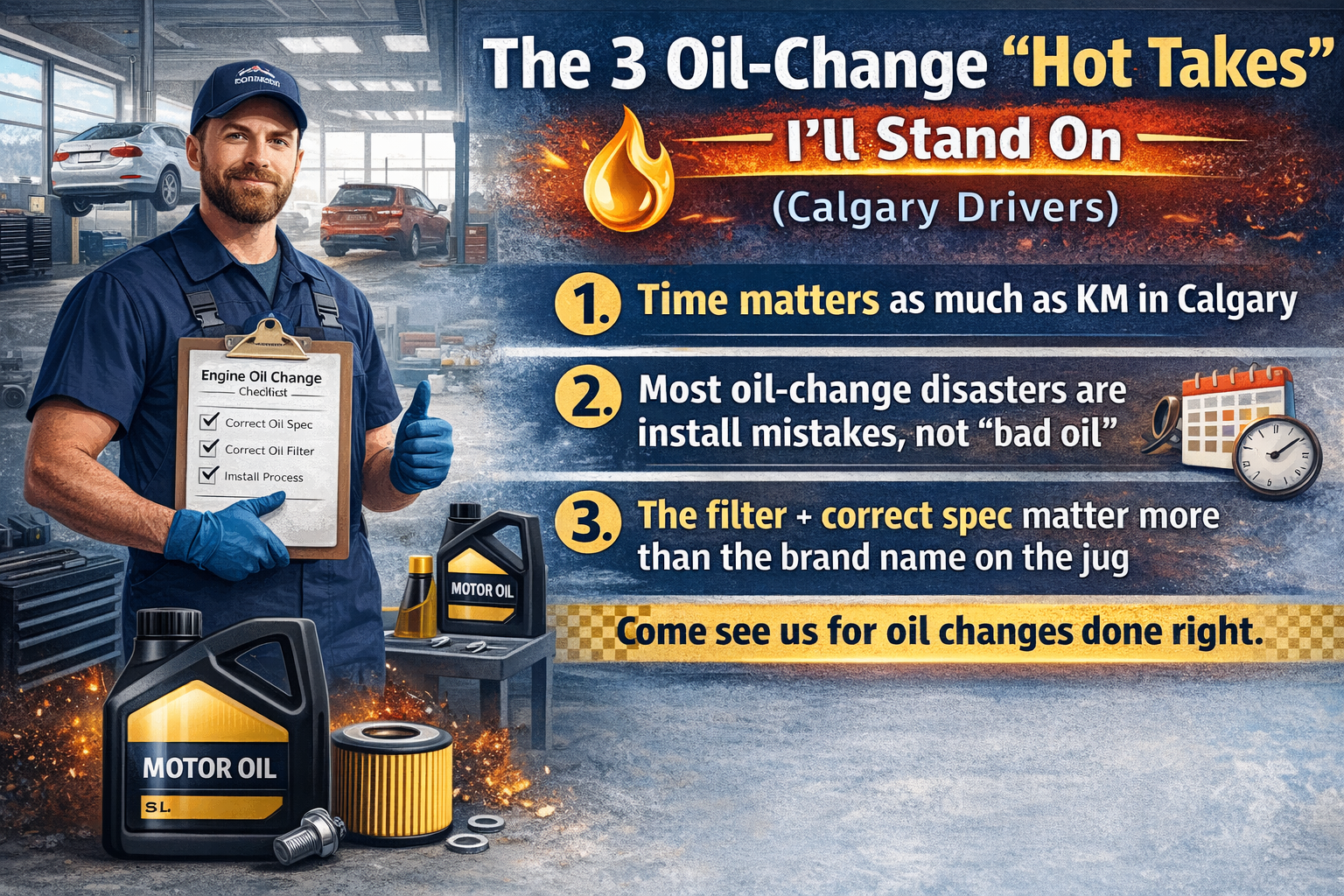
1) Time matters as much as km in Calgary
Cold starts + quick city trips load oil with moisture and fuel. That’s how people “low-km” their way into sludge, varnish, and timing-related headaches. If you’re doing mostly short runs, don’t wait forever just because the odometer isn’t climbing.
2) Most oil-change disasters are install mistakes, not “bad oil”
When engines get hurt, it’s usually not because someone chose the “wrong brand.” It’s because of avoidable mistakes like:
wrong filter
double-gasket
overfill / underfill
stripped drain plug
missing sealing washer
rushed final checks
3) The filter + correct spec matter more than the name on the jug
Correct viscosity/spec + a quality filter + proper install beats “premium oil” with sloppy work every time. If the spec is wrong or the filter is cheap/incorrect, you’re gambling — even if the oil is expensive.
Real-World Oil Change Intervals (What I’d Actually Recommend)
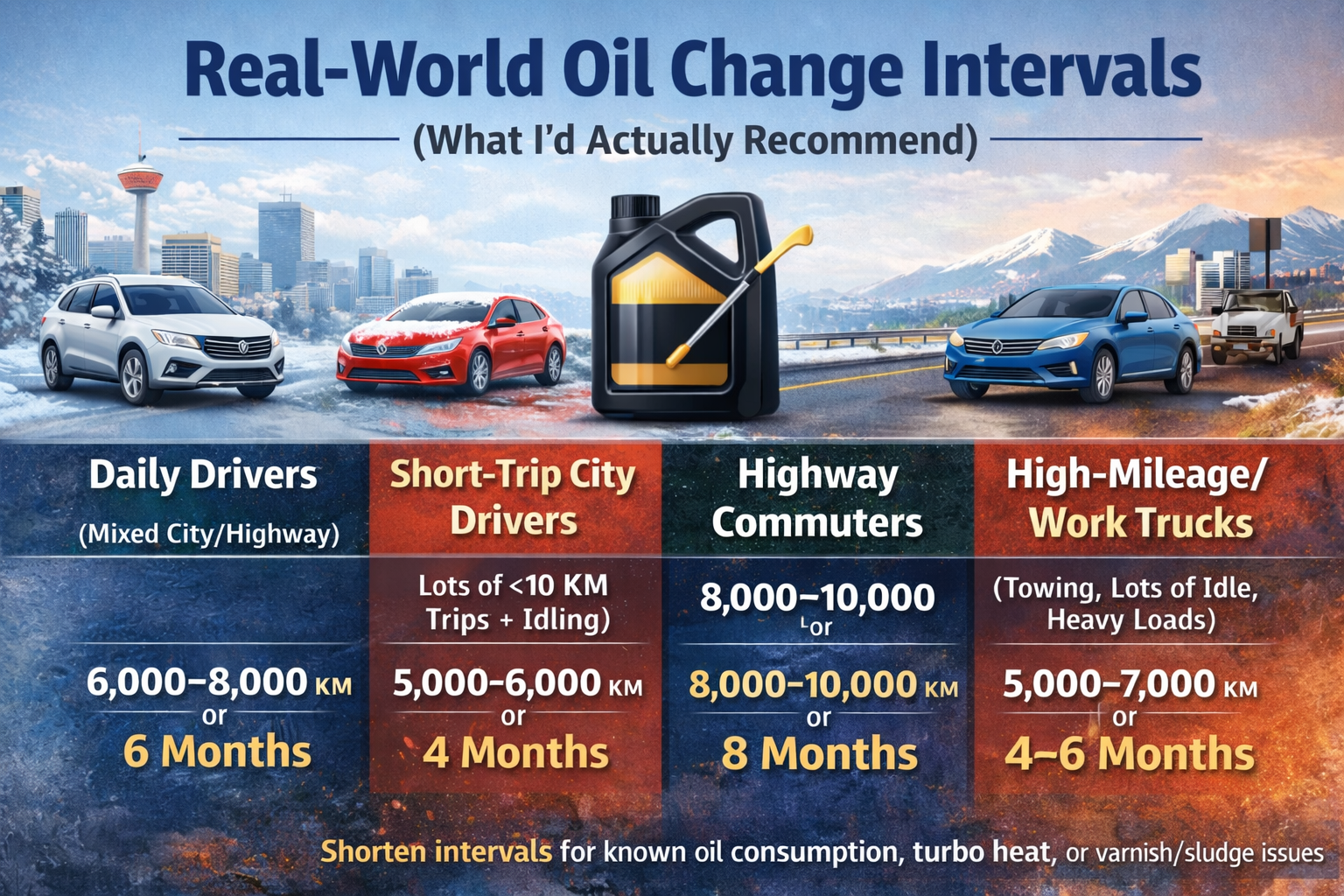
These are Calgary-friendly intervals that account for cold starts and real driving patterns. (If your vehicle has known oil consumption, turbo heat, or you’re seeing varnish/sludge, tighten them.)
Daily drivers (mixed city/highway): 6,000–8,000 km or 6 months
Short-trip city drivers (<10 km trips + idling): 5,000–6,000 km or 4 months
Highway commuters (steady temps, long runs): 8,000–10,000 km or 8 months
High-mileage / work trucks (towing, lots of idle, heavy loads): 5,000–7,000 km or 4–6 months
Quick rule: If your driving is mostly “start cold, drive 8 minutes, shut off,” you’re in the short-trip bucket — even if you don’t feel like you are.
Time vs Mileage: Which One Should You Follow?
In the real world, you follow both:
Mileage covers heat cycles, contamination, and additive wear from driving.
Time covers oxidation, moisture buildup, and breakdown even when the vehicle isn’t driven much.
If your vehicle has an oil-life monitor, use it — but in Calgary, I still like a time cap so short-trip vehicles don’t stretch too far between services.
Signs You’re Due (Even If You’re Not at the “Sticker” Mileage)
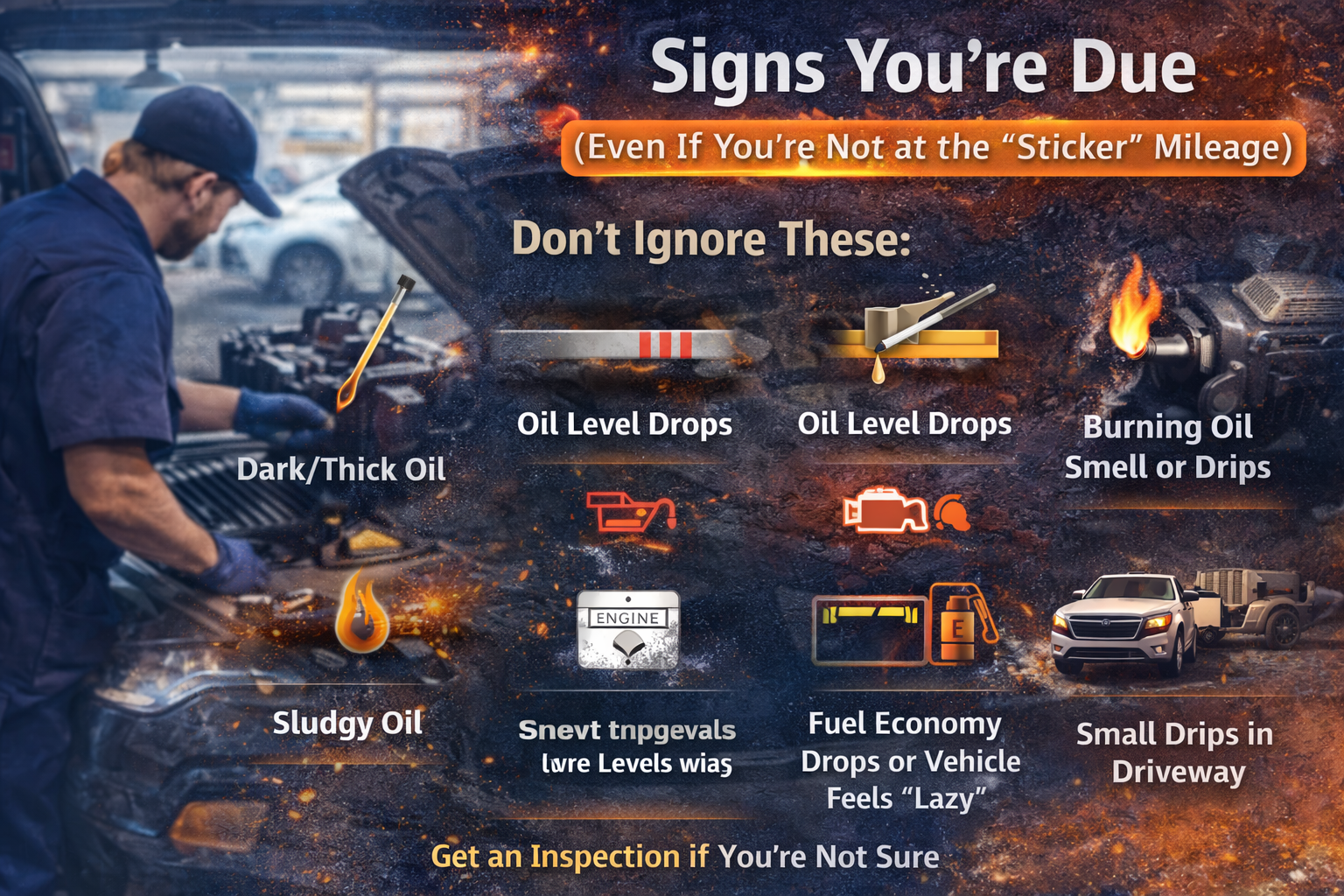
Don’t ignore these:
Oil looks dark/thick quickly
Oil level drops between changes
Louder-than-normal engine noise on cold starts
Burning oil smell or small drips on the driveway
Oil light or check engine light
Fuel economy drops or the vehicle feels “lazy”
If you’re not sure, a quick inspection can save you from guessing.
What Happens If You Stretch It Too Far
Old oil doesn’t protect like it should. Over time that can mean:
sludge/varnish buildup
faster wear on timing components
oil consumption getting worse
overheating risk and poor performance
expensive repairs that started as “just maintenance”
Oil changes are cheap compared to engines.
My Non-Negotiable Oil Change + Inspection Checklist (What Most Places Skip)
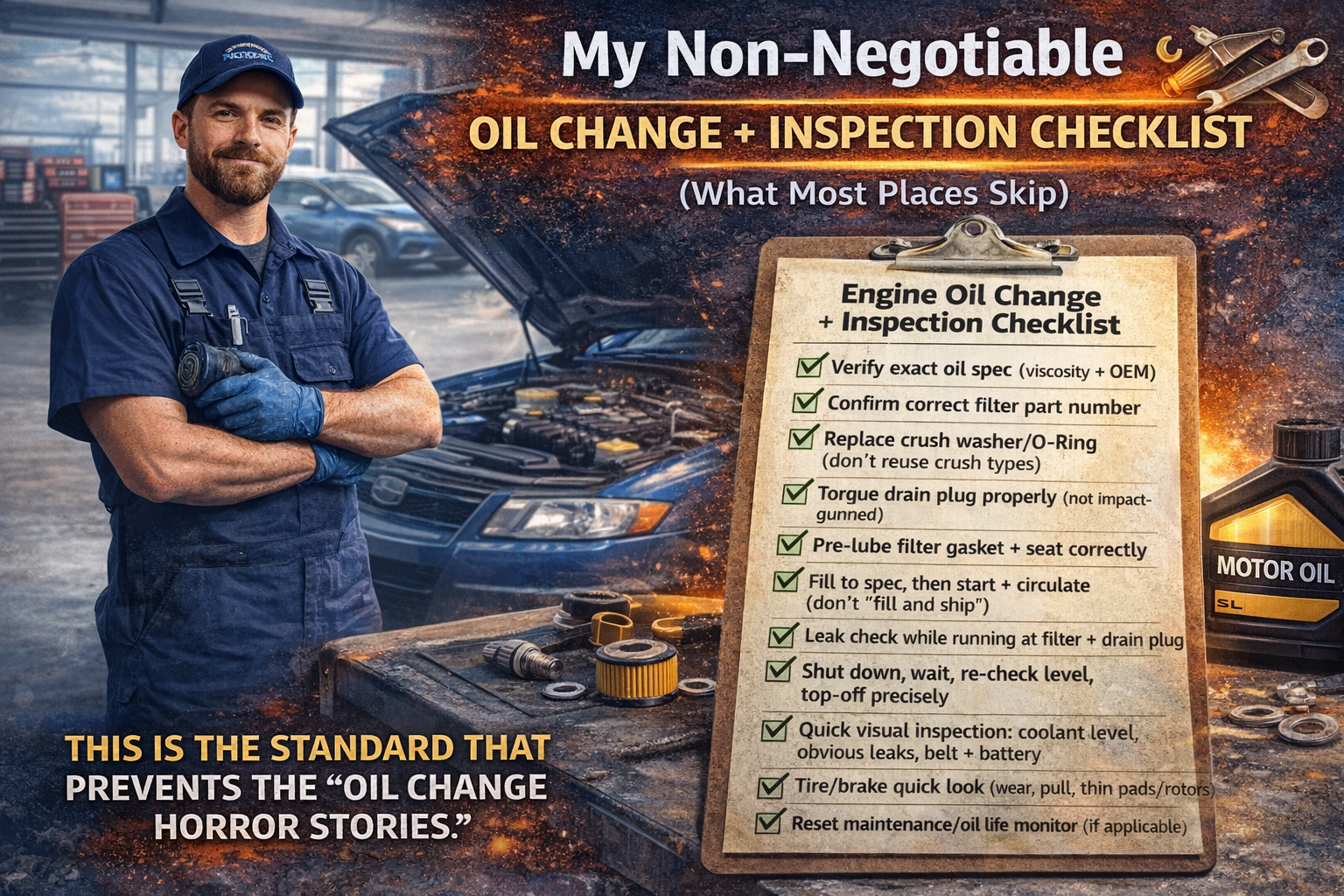
This is the standard that prevents the “oil change horror stories”:
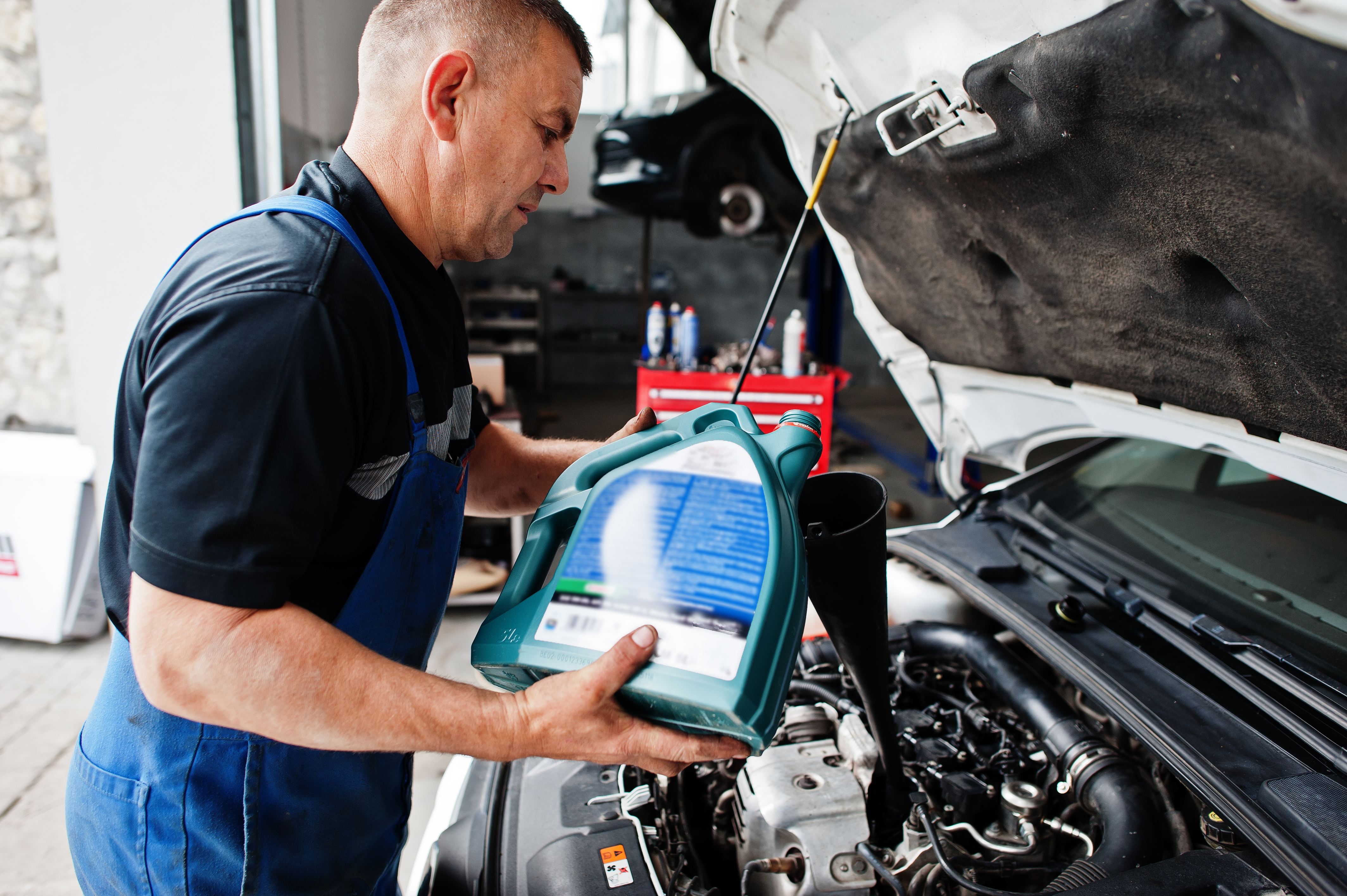
Verify the exact oil spec (viscosity + OEM spec if required), not “close enough.”
Confirm correct filter part number + gasket condition before install.
Replace crush washer/O-ring where applicable (don’t reuse crush types).
Torque the drain plug properly (no impact gun).
Pre-lube the filter gasket + seat correctly (no dry gasket, no over-tightening).
Fill to spec, then start and circulate oil (don’t “fill and ship”).
Leak check while running at filter + drain plug.
Shut down, wait, re-check level, and top-off precisely.
Quick visual inspection for “engine killers”: coolant level/condition, obvious leaks, belt condition, battery concerns, anything unsafe.
Tire/brake quick look (wear, pull, obvious thin pads/rotors).
Reset maintenance/oil life monitor (if applicable).
Separate “urgent” vs “monitor” so you leave with clarity.
That’s how you avoid the common failures: wrong filter, missing washer, and “it was fine when it left”… until it wasn’t.
Two Real Case Studies: How a Proper Oil Change Prevented Bigger Problems
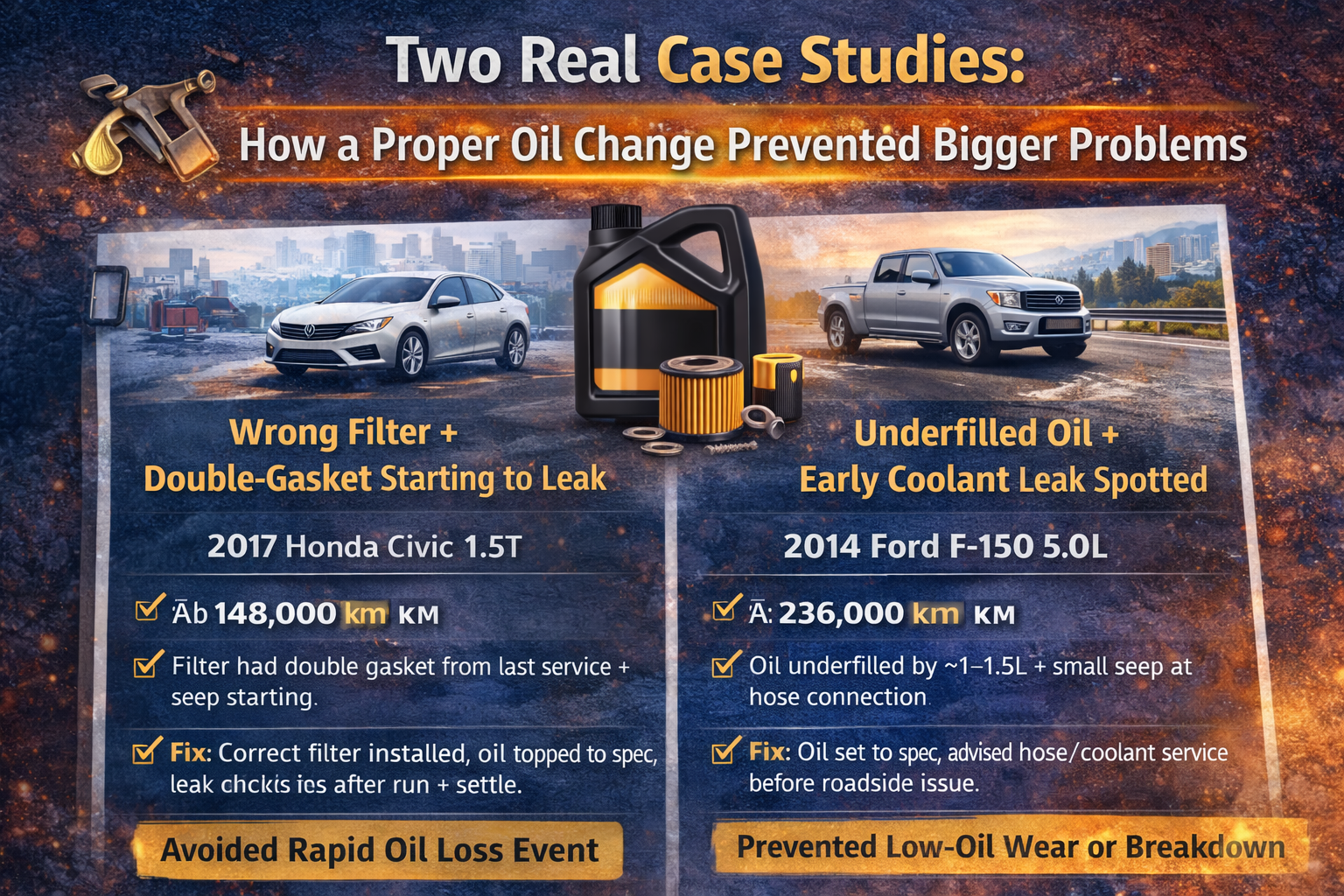
Case 1: Wrong filter + double-gasket starting to leak
Vehicle: Honda Civic (2017 1.5T)
KM: ~148,000
Driving: mostly short-trip city driving (Calgary NE errands + commuting)
Found: filter had a double gasket from the last service + fresh seepage starting, oil level slightly low
Fix: correct filter installed, gasket surface cleaned, oil topped to spec, leak check after run + re-check after settle
Outcome: avoided a potential rapid oil loss event; customer came back later with no leaks and stable level
Case 2: Underfilled oil + early coolant leak spotted
Vehicle: Ford F-150 (2014 5.0L)
KM: ~236,000
Driving: work truck (idling + hauling tools, mixed highway/city)
Found: oil underfilled by ~1–1.5L from prior service + small coolant seep at a hose connection
Fix: correct oil level set, baseline documented, advised pressure test / hose service before it became a roadside issue
Outcome: prevented long-term low-oil wear and likely avoided an overheat breakdown later
These are exactly why I say oil-change problems are usually install/process problems — not “oil quality debates.”
Synthetic vs Conventional: What I Recommend (Without the Hype)
Synthetic is usually the better choice for Calgary because of cold-start protection and stability in temperature swings.
Conventional can still work for certain vehicles, but it typically needs shorter intervals.
The bigger point: use the correct spec for your engine and pair it with a quality filter, then install it properly. That’s what keeps engines alive.
The Quick DIY Check You Should Do Between Oil Changes
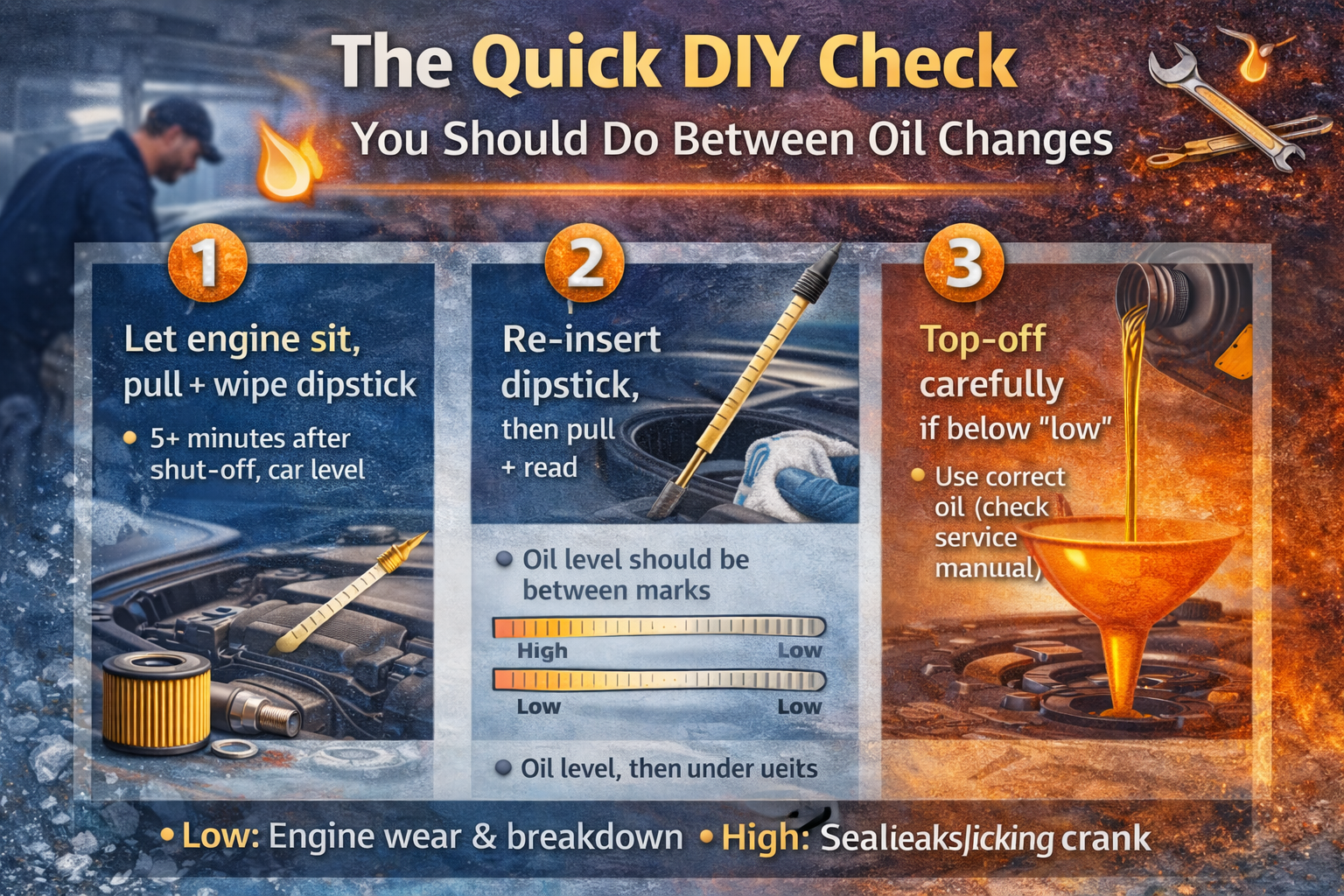
Once a month (or before a road trip):
Park level, shut the engine off, wait ~10–20 minutes
Check the dipstick level
If you’re consistently low, don’t ignore it — that’s a clue (leak, consumption, or both)
Low oil level causes damage fast, even if the oil is “new.”
Book Your Oil Change in Calgary NE
If you want it done right — correct spec, quality filter, proper install, and a real inspection — come see us.
$70 Synthetic Oil Change (up to 5L) + Free Inspection
Price may vary for over 5L, specialty oil, or non-standard filters
Call Now: (587) 966-3425
CTAs to use sitewide: Book Appointment, Get a Quick Estimate
Address: 4519 12 St NE Bay #2, Calgary, AB T2E 4R1
Hours: Monday–Saturday 9:00 AM–5:00 PM
Main promo wording: “Claim the $70 Oil Change.”
FAQs: How Often to Change Motor Oil (Quick Answers)
1) What’s the safest general rule for Calgary?
Use km + time together. If you’re short-tripping, don’t stretch it just because mileage is low.
2) How often to change motor oil for short trips?
Typically 5,000–6,000 km or 4 months.
3) How often should highway drivers change oil?
Often 8,000–10,000 km or 8 months, because the oil spends more time at stable operating temp.
4) Is synthetic always 10,000+ km?
Not automatically. Synthetic can go longer, but driving pattern, engine condition, and Calgary climate still matter.
5) What causes sludge in “low km” cars?
Short trips + cold starts = moisture/fuel contamination and poor burn-off — sludge can build even with low mileage.
6) What’s the biggest oil change mistake you see?
Wrong filter, double gasket, missing washer, and bad final level checks.
7) Should I trust the oil-life monitor?
Yes, but I still recommend a time cap for Calgary short-trip vehicles.
8) How do I know if my oil level is low?
Check the dipstick monthly. If you’re low repeatedly, you may have a leak or consumption issue.
9) Does the filter really matter?
Yes. Correct part number and a quality filter matter more than people think.
10) Can an oil change help spot other problems?
Absolutely — leaks, low coolant, belt issues, battery concerns, and brake/tire wear often show up during a proper inspection.
The Best Oil Change Schedule Is the One That Matches Your Real Driving

If you remember nothing else: Calgary driving makes time-based oil changes just as important as mileage. Short trips and cold starts can trash oil early, and most engine damage stories start with install mistakes and missed checks — not “bad oil.”
If you want a clean, professional oil change done the right way (with a real inspection), Claim the $70 Oil Change at Cosmos Customs.
Call Now: (587) 966-3425
Or hit Book Appointment / Get a Quick Estimate on the site.

We’re dedicated to keeping you safe on the road with top-quality tires and expert service. Visit us for all your tire needs and experience the difference. Drive confidently, knowing we’ve got you covered every mile of the way.


