
Engine Diagnostics in Calgary, AB (Check Engine Light Help)
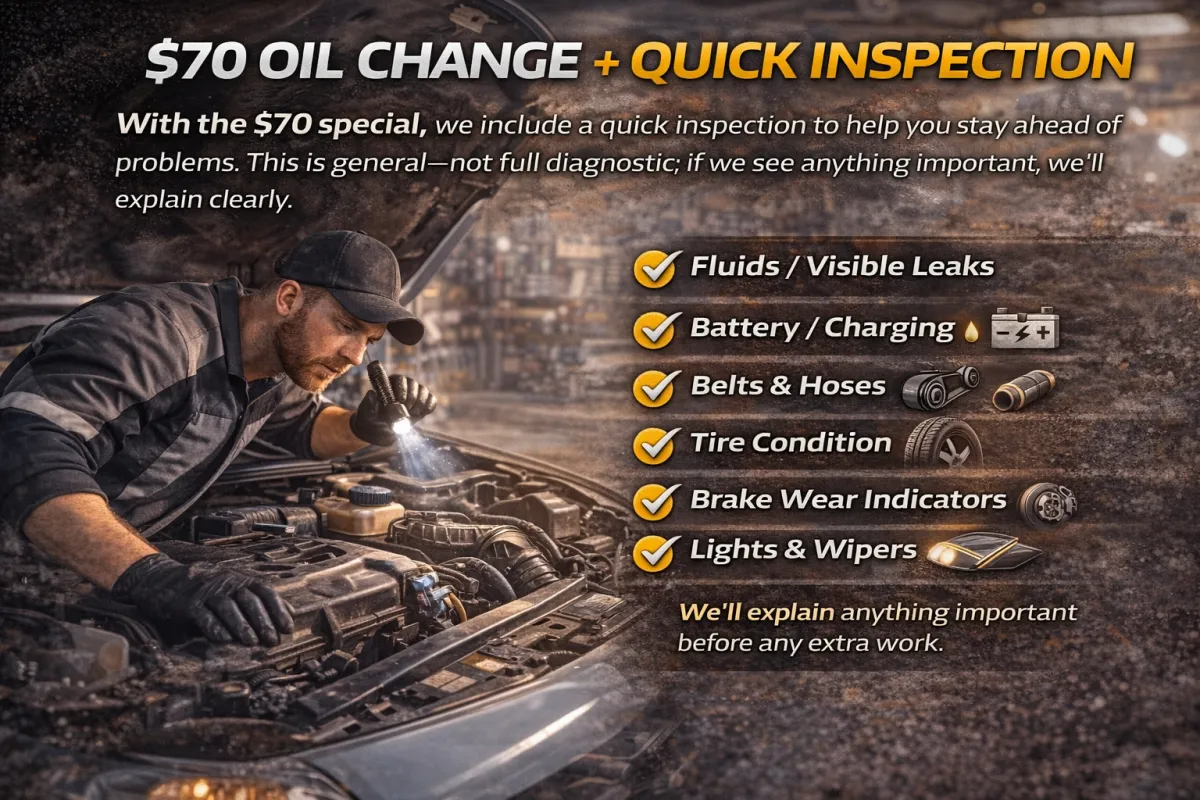
If your check engine light is on—or your vehicle is running rough, losing power, or using more fuel—Cosmos Customs provides trusted engine diagnostics in Calgary to find the real cause. We don’t guess and replace random parts. We test, confirm, and explain everything in simple terms.
✅ Fast answers | ✅ Clear next steps | ✅ Honest quotes
What Engine Diagnostics Means (Simple Explanation)
Engine diagnostics is how we figure out why your vehicle has a warning light or a running issue. A code scan is only the start—diagnostics is the full process of checking what’s actually causing the problem so you don’t waste money on the wrong fix.
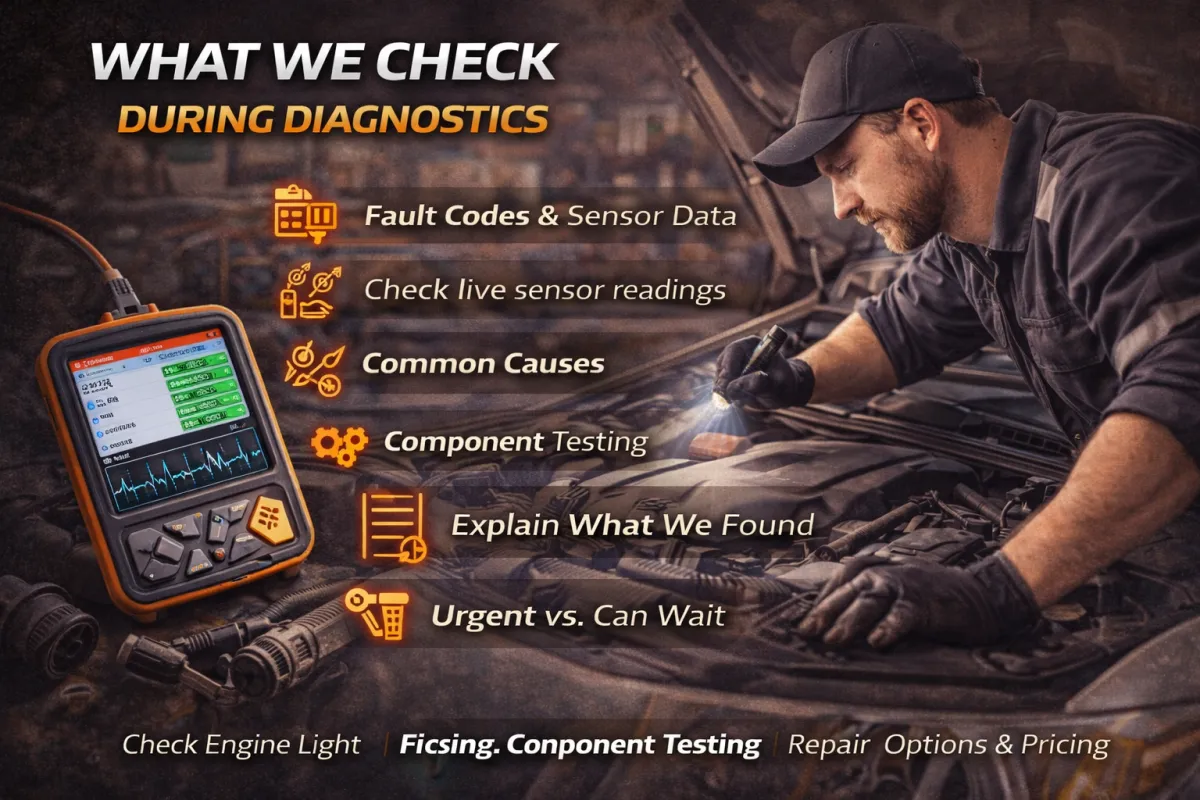
What We Check During Diagnostics
Depending on the issue, we may:
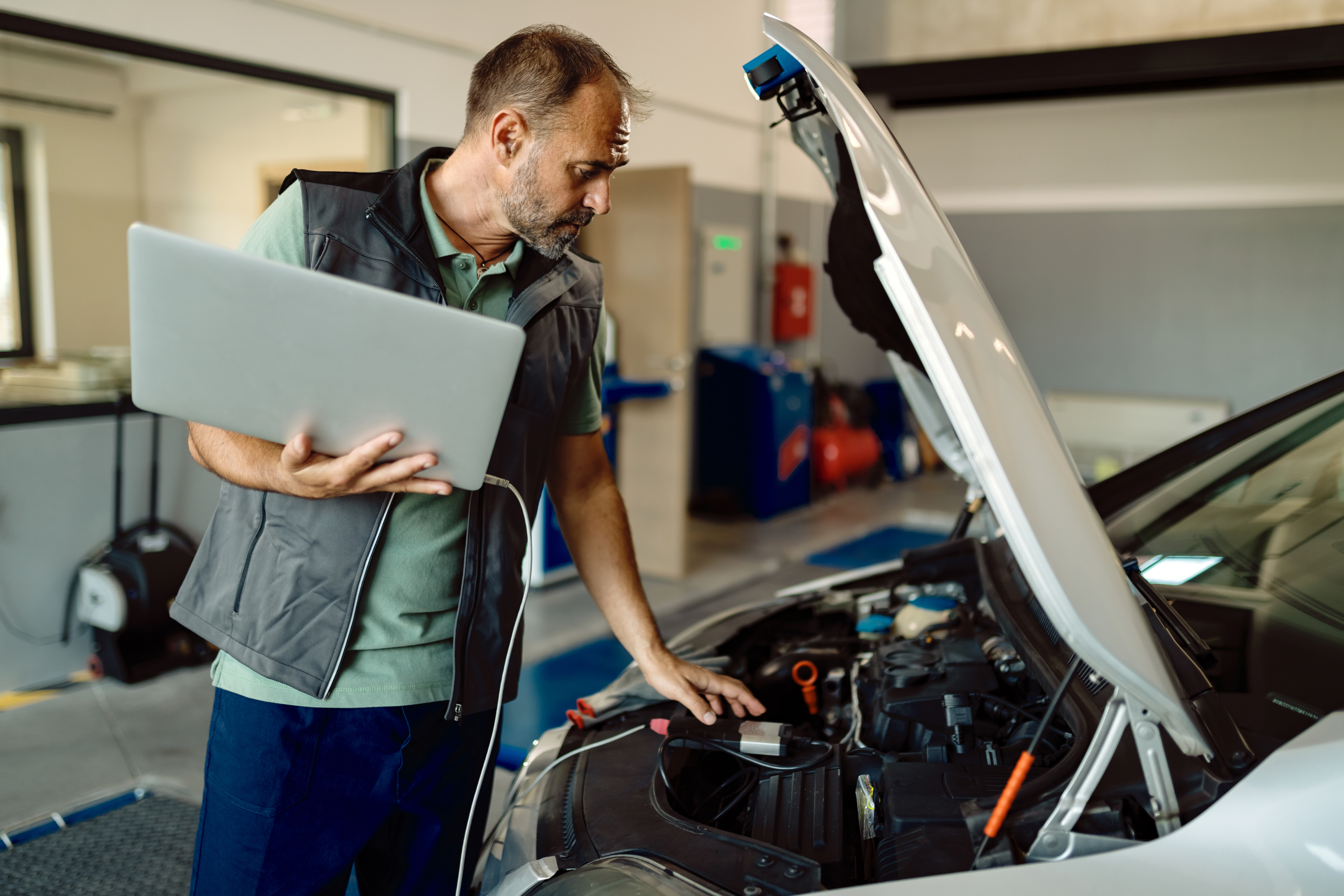
-> Scan fault codes and review system data
-> Check live sensor readings
-> Confirm symptoms (idle, acceleration, performance)
-> Inspect common causes (wiring, connectors, vacuum/air leaks)
-> Test related components when needed
After testing, we explain:
-> What we found
-> What’s urgent vs. what can wait
-> Your best repair options and pricing
Common Reasons the Check Engine Light Comes On
Common reasons the check engine light comes on include a loose or failing gas cap, misfires from spark plugs or ignition coils, sensor issues (like oxygen sensors or MAF/MAP sensors), air/fuel delivery problems, vacuum leaks, emissions-related faults, and in some cases battery or charging system issues. We’ll identify the real cause before recommending any repairs.
Symptoms That Mean You Should Book Diagnostics
Book engine diagnostics if your check engine light is on, your vehicle has a rough idle or shaking, you’ve noticed loss of power or slow acceleration, poor fuel economy, stalling or hard starting, unusual smells or smoke, or the engine is running louder than normal. Important: If your check engine light is flashing, stop driving and call us right away—this can indicate active misfires that may damage the catalytic converter.
Book Engine Diagnostics in Calgary
Address: 4519 12 St NE Bay #2, Calgary, AB T2E 4R1
Phone: (587) 966-3425
✅ Book Diagnostics | ✅ Call Now
Brake Service FAQs
What is engine diagnostics?
Engine diagnostics is testing that finds the real cause of a check engine light or performance problem by scanning codes and checking live data/systems.
What does engine diagnostics include?
It usually includes a scan for fault codes, reviewing live sensor data, confirming symptoms, and basic checks to narrow down the cause.
Is a code scan the same as diagnostics?
No. A code scan is the starting point. Diagnostics includes testing to confirm what’s actually causing the problem.
Why is my check engine light on?
Common reasons include a loose gas cap, misfires, sensor issues, vacuum leaks, emissions faults, or air/fuel problems.
Can I drive with the check engine light on?
If it’s solid, you can often drive short-term, but you should book diagnostics soon. If it’s flashing, stop driving and call us.
What does a flashing check engine light mean?
A flashing light often means an active misfire that can damage the catalytic converter. It’s urgent.
How long does engine diagnostics take?
Some issues can be found quickly, but time depends on the symptom and whether the problem is intermittent.
Will diagnostics tell me exactly what’s wrong?
In most cases, yes. Some issues require extra testing, but we’ll explain what’s needed and why.
Do you clear engine codes after diagnostics?
We can clear codes when appropriate, but clearing without fixing the cause usually brings the light back.
Why does the check engine light come back after clearing?
Because the problem wasn’t fixed—clearing codes only resets the warning, not the issue.
Can a loose gas cap really trigger the engine light?
Yes. A loose or faulty gas cap can cause an EVAP system fault and turn the light on.
What symptoms mean I should book diagnostics?
Check engine light, rough idle, shaking, loss of power, stalling, hard starting, poor fuel economy, smells, or smoke.
What’s a misfire and how do you test it?
A misfire is when one or more cylinders doesn’t fire properly. We use scan data and testing to identify the cause (spark, fuel, air, sensors).
Can spark plugs or coils cause the check engine light?
Yes. Worn plugs or failing ignition coils are common causes of misfires and engine light codes.
Can a bad oxygen sensor affect fuel economy?
Yes. O2 sensors help manage the air/fuel mix. If they fail, fuel economy and performance can drop.
Can diagnostics find vacuum leaks?
Yes. Vacuum/air leaks can cause rough idle and lean codes. We inspect common leak areas and confirm symptoms.
Will diagnostics prevent me from wasting money on parts?
Yes. Proper diagnostics helps avoid “guessing” and replacing parts that aren’t actually bad.
Do you fix the problem after diagnostics?
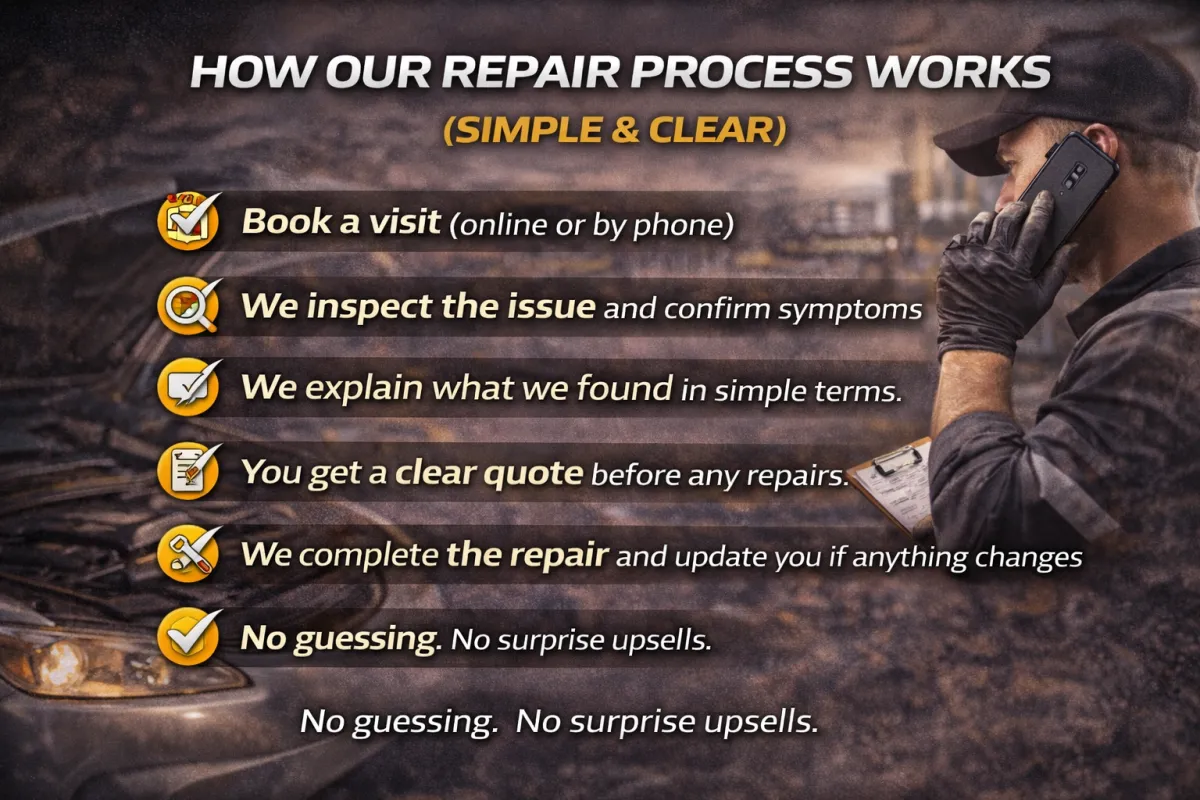
Yes—once you approve the quote. We’ll explain options and pricing before any repairs.
Can engine diagnostics find electrical problems too?
Often yes. Many engine issues are tied to sensors, wiring, battery/charging systems, or connections.
How do I book engine diagnostics in Calgary?
Call (587) 966-3425 or book online. We’re located at 4519 12 St NE Bay #2, Calgary, AB T2E 4R1.
Book an Appointment Today!
Secure your spot now and experience the difference – quick, easy, and hassle-free booking!
Book any of our services today!
We’re dedicated to keeping you safe on the road with top-quality tires and expert service. Visit us for all your tire needs and experience the difference. Drive confidently, knowing we’ve got you covered every mile of the way.


